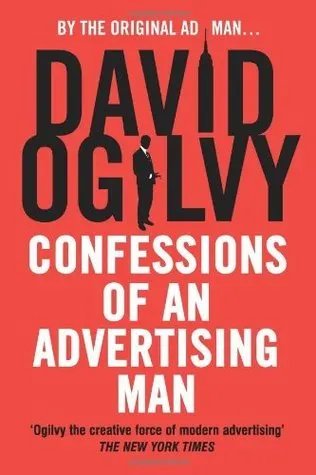
Key Insights & Memorable Quotes
The most popular highlights from Confessions of an Advertising Man, saved by readers on Screvi.
“The consumer isn't a moron. She is your wife.”
“Where people aren’t having any fun, they seldom produce good work.”
“The creative process requires more than reason. Most original thinking isn't even verbal. It requires 'a groping experimentation with ideas, governed by intuitive hunches and inspired by the unconscious.' The majority of business men are incapable of original thinking because they are unable to escape from the tyranny of reason. Their imaginations are blocked.”
“What you say in advertising is more important than how you say it.”
“As a private person, I have a passion for landscape, and I have never seen one improved by a billboard. Where every prospect pleases, man is at his vilest when he erects a billboard. When I retire from Madison Avenue, I am going to start a secret society of masked vigilantes who will travel around the world on silent motor bicycles, chopping down posters at the dark of the moon. How many juries will convict us when we are caught in these acts of beneficent citizenship?”
“Much of the messy advertising you see on television today is the product of committees. Committees can criticize advertisements, but they should never be allowed to create them.”
“TruthTell the truth, but make the truth fascinating.”
“They are coming to rely too much on research, and they use it as a drunkard uses a lamp post, for support rather than for illumination.”
“Pay peanuts and you get monkeys.”
“I like to succeed in public, but to fail in secret.”
“Search all he parks in all your cities; you'll find no statues of committees.”
“At the same time President Kennedy invited me - and all the other millions of Europe - to try the novelty of tourism in the U.S., he issued a secret directive to 180,000,000 Americans to be nice to us. How else to explain the embarrassing generosity, the overwhelming kindness, the extreme courtesy at every turn?”
“A posture of enthusiasm is not always the one best calculated to succeed.”
“He tells us that commercials which start by setting up a problem, then wheel up your product to solve the problem, then prove the solution by demonstration, sell four times as many people as commercials which merely preach about the product.”
“Committees can criticize advertisements, but they should never be allowed to create them.”
“In the best establishments, promises are always kept, whatever it may cost in agony and overtime.”
Find Another Book
Search by title or author to explore highlights from other books.
More Books You Might Like
Explore highlights from similar books.