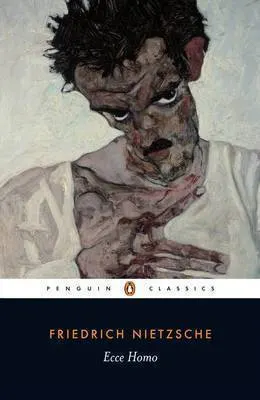
Key Insights & Memorable Quotes
The most popular highlights from Ecce Homo, saved by readers on Screvi.
“I know my fate. One day my name will be associated with the memory of something tremendous — a crisis without equal on earth, the most profound collision of conscience, a decision that was conjured up against everything that had been believed, demanded, hallowed so far. I am no man, I am dynamite.”
“I am no man, I am dynamite.”
“How much truth does a spirit endure, how much truth does it dare?”
“Resentment, born of weakness, harms no one more than the weak person himself.”
“Ultimately no one can hear in things
“One has to know the size of one's stomach.”
“To get up in the morning, in the fullness of youth, and open a book--now that’s what I call vicious!”
“Another thing is war. I am naturally warlike. Attacking is one of my instincts. Being able to be an enemy, being an enemy — these require a strong nature, perhaps; in any case every strong nature presupposes them. It needs resistances, so it seeks resistance: aggressive pathos is just as integrally necessary to strength as the feeling of revenge and reaction is to weakness. Woman, forinstance, is vengeful: that is a condition of her weakness, as is her sensitivity to other people’s afflictions. — The strength of anattacker can in a way be gauged by the opposition he requires; allgrowth makes itself manifest by searching out a more powerful opponent — or problem: for a philosopher who is warlike challenges problems to duels, too. The task is not to master all resistances, but only those against which one has to pit one’s entire strength, suppleness, and mastery-at-arms — opponents who are equal...”
“Water is sufficient...the spirit moves over water.”
“I am a disciple of the philosopher Dionysus, and I would prefer to be even a satyr than a saint.”
“Saying yes to life, even in its strangest and hardest problems.”
“It is not doubt but certainty that drives you mad...”
“I attack only things that are triumphant — if necessary, I wait until they become triumphant.”
“Every acquisition, every step forward in knowledge is the result of courage, of severity toward oneself, of cleanliness with respect to oneself.”
“Energy wasted on negative ends.”
“I would prefer to be a satyr rather than a saint.”
“Pain is not seen as an objection to life: 'If you have no happiness left to give me, well then! you still have your pain...”
“...good men never tell the truth. The good taught you false shores and false securities: you were born and kept in the lies of the good. Everything has been distorted and twisted down to its very bottom through the good”
“I fail to remember ever having made an effort — no trace of struggle is detectable in my life, I am the opposite of a heroic nature. To “want” something, to “strive” for something, to have an “end,” a “desire” in mind — I know none of this from my experience. Even at this moment I look out upon my future — a broad future! — as upon a smooth sea: no desire ripples upon it.Not in the least do I want anything to be different from what it is; I myself do not want to be any different ... But thus I have always lived.”
“Pain does not count as an objection to life”
Find Another Book
Search by title or author to explore highlights from other books.
More Books You Might Like
Explore highlights from similar books.


