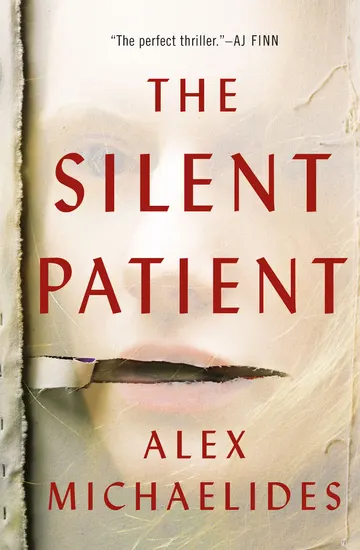
Key Insights & Memorable Quotes
The most popular highlights from The Silent Patient, saved by readers on Screvi.
...we often mistake love for fireworks - for drama and dysfunction. But real love is very quiet, very still. It's boring, if seen from the perspective of high drama. Love is deep and calm - and constant.
Remember, love that doesn't include honesty doesn't deserve to be called love.
Choosing a lover is a lot like choosing a therapist. We need to ask ourselves, is this someone who will be honest with me, listen to criticism, admit making mistakes, and not promise the impossible?
Unexpressed emotions will never die. They are buried alive, and will come forth later, in uglier ways. —SIGMUND FREUD
You know, one of the hardest things to admit is that we weren’t loved when we needed it most. It’s a terrible feeling, the pain of not being loved.
No one is born evil. As Winnicott put it, “A baby cannot hate the mother, without the mother first hating the baby.
We're all crazy, I believe, just in different ways.
There’s so much pain everywhere, and we just close our eyes to it. The truth is we’re all scared. We’re terrified of each other.
We are made up of different parts, some good, some bad, and a healthy mind can tolerate this ambivalence and juggle both good and bad at the same time. Mental illness is precisely about a lack of this kind of integration - we end up losing contact with the unacceptable parts of ourselves.
You become increasingly comfortable with madness - and not just the madness of others, but your own. We’re all crazy, I believe, just in different ways.
Somehow grasping at vanishing snowflakes is like grasping at happiness: an act of possession that instantly gives way to nothing. It reminded me that there was a world outside this house: a world of vastness and unimaginable beauty; a world that for now, remained out of my reach. That memory had repeatedly returned to me over the years. It's as if the misery that surrounded that brief moment of freedom made it burn even brighter: a tiny light surrounded by darkness.
I believe the same is true for most people who go into mental health. We are drawn to this profession because we are damaged - we study psychology to heal ourselves. Whether we are prepared to admit this or not is another question.
Once you name something, it stops you seeing the whole of it, or why it matters. You focus on the word, which is just the tiniest part, really, the tip of an iceberg.
The aim of therapy is not to correct the past, but to enable the patient to confront his own history, and to grieve over it. —ALICE MILLER
Sometimes it takes courage, you know, and a long time, to be honest.
Trust, once lost, is hard to recover.
About fireworks?About love. About how we often mistake love for fireworks - for drama and dysfunction. But real love is very quiet, very still. It's boring, if seen from the perspective of high drama. Love is deep and calm - and constant. I imagine you do give Kathy love - in the true sense of the word. Whether or not she is capable of giving it back to you is another question.
I suppose what scares me is giving in to the unknown.
I didn’t want to die. Not yet; not when I hadn’t lived.
At the time I didn’t understand. But that’s how therapy works. A patient delegates his unacceptable feelings to his therapist; and she holds everything he is afraid to feel, and feels it for him. Then, ever so slowly, she feeds his feelings back to him.
I didn't kill Gabriel. Gabriel killed me. All I did was pull the trigger.
Well, I’d rather be lonely than be with the wrong person.
Perhaps some of us are simply born evil, and despite our best efforts we remain that way.
Love that doesn't include honesty doesn't deserve to be called love.
Somehow grasping at vanishing snowflakes is like grasping at happiness: an act of possession that instantly gives way to nothing.
About love. About how we often mistake love for fireworks—for drama and dysfunction. But real love is very quiet, very still. It’s boring, if seen from the perspective of high drama. Love is deep and calm—and constant.
Unexpressed emotions will never die. They are buried alive, and will come forth later, in uglier ways. Sigmund Freud
My old therapist used to say intimacy requires the repeated experience of being responded to—and that doesn’t happen overnight.
need to open my eyes and look—and be aware of life as it is happening, and not simply how I want it to be.
Sometimes it’s hard to grasp why it is that the answers to the present lie in the past. A simple analogy might be helpful: a leading psychiatrist in the field of sexual abuse once told me she had, in thirty years of extensive work with paedophiles, never met one who hadn’t himself been abused as a child. This doesn’t mean that all abused children go on to become abusers; but it is impossible for someone who was not abused to become an abuser. No one is born evil. As Winnicott put it: ‘A baby cannot hate the mother, without the mother first hating the baby.’ As babies, we are innocent sponges, blank slates – with only the most basic needs present: to eat, shit, love and be loved. But something goes wrong, depending on the circumstances into which we are born, and the house in which we grow up. A tormented, abused child can never take revenge in reality, as she is powerless and defenceless, but she can – and must – harbour vengeful fantasies in her imagination. Rage, like fear, is reactive in nature.
Find Another Book
Search by title or author to explore highlights from other books.
More Books You Might Like
Explore highlights from similar books.