Key Insights & Memorable Quotes
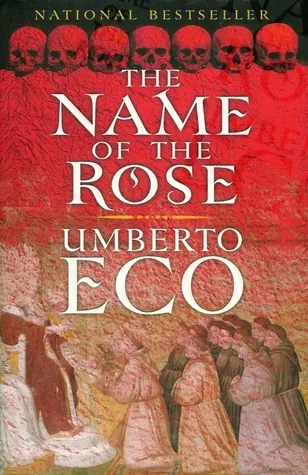
The most popular highlights from The Name of the Rose, saved by readers on Screvi.
“Books are not made to be believed, but to be subjected to inquiry. When we consider a book, we mustn't ask ourselves what it says but what it means...”
“Then why do you want to know?""Because learning does not consist only of knowing what we must or we can do, but also of knowing what we could do and perhaps should not do.”
“Until then I had thought each book spoke of the things, human or divine, that lie outside books. Now I realized that not infrequently books speak of books: it is as if they spoke among themselves. In the light of this reflection, the library seemed all the more disturbing to me. It was then the place of a long, centuries-old murmuring, an imperceptible dialogue between one parchment and another, a living thing, a receptacle of powers not to be ruled by a human mind, a treasure of secrets emanated by many minds, surviving the death of those who had produced them or had been their conveyors.”
“What is love? There is nothing in the world, neither man nor Devil nor any thing, that I hold as suspect as love, for it penetrates the soul more than any other thing. Nothing exists that so fills and binds the heart as love does. Therefore, unless you have those weapons that subdue it, the soul plunges through love into an immense abyss.”
“Fear prophets, Adso, and those prepared to die for the truth, for as a rule they make many others die with them, often before them, at times instead of them.”
“Daytime sleep is like the sin of the flesh; the more you have the more you want, and yet you feel unhappy, sated and unsated at the same time.”
“Love is wiser than wisdom.”
“We live for books. A sweet mission in this world dominated by disorder and decay.”
“A dream is a scripture, and many scriptures are nothing but dreams.”
“Show not what has been done, but what can be. How beautiful the world would be if there were a procedure for moving through labyrinths.”
“A book is a fragile creature, it suffers the wear of time, it fears rodents, the elements and clumsy hands. so the librarian protects the books not only against mankind but also against nature and devotes his life to this war with the forces of oblivion.”
“Yesterday's rose endures in its name, we hold empty names.”
“True learning must not be content with ideas, which are, in fact, signs, but must discover things in their individual truth.”
“How peaceful life would be without Love, Adso. How Safe. How Tranquil. And how Dull.”
“Nothing gives a fearful man more courage than another's fear.”
“The order that our mind imagines is like a net, or like a ladder, built to attain something. But afterward you must throw the ladder away, because you discover that, even if it was useful, it was meaningless.”
“A narrator should not supply interpretations of his work; otherwise he would have not written a novel, which is a machine for generating interpretations.”
“After so many years even the fire of passion dies, and with it what was believed the light of the truth. Who of us is able to say now whether Hector or Achilles was right, Agamemnon or Priam, when they fought over the beauty of a woman who is now dust and ashes?”
“How beautiful was the spectacle of nature not yet touched bythe often perverse wisdom of man!”
“Then we are living in a place abandoned by God," I said, disheartened."Have you found any places where God would have felt at home?" William asked me, looking down from his great height.”
“The older I grow and the more I abandon myself to God's will, the lessI value intelligence that wants to know and will that wants to do; andas the only element of salvation I recognize faith, which can wait patiently, without asking too many questions.”
“I dared, for the first and last time in my life, to express a theological conclusion: "But how can a necessary being exist totally polluted with the possible? What difference is there, then, between God and primogenial chaos? Isn't affirming God's absolute omnipotence and His absolute freedom with regard to His own choices tantamount to demonstrating that God does not exist?”
“The beauty of the universe consists not only of unity in variety, but also of variety in unity.”
“Under torture you are as if under the dominion of those grasses that produce visions. Everything you have heard told, everything you have read returns to your mind, as if you were being transported, not toward heaven, but toward hell. Under torture you say not only what the inquisitor wants, but also what you imagine might please him, because a bond (this, truly, diabolical) is established between you and him ... These things I know, Ubertino; I also have belonged to those groups of men who believe they can produce the truth with white-hot iron. Well, let me tell you, the white heat of truth comes from another flame.”
“This, in fact, is the power of the imagination, which, combining the memory of gold with that of the mountain, can compose the idea of a golden mountain.”
“In that face, deformed by hatred of philosophy, I saw for the first time the portrait of the Antichrist, who does not come from the tribe of Judas, as his heralds have it, or from a far country. The Antichrist can be born from piety itself, from excessive love of God or of the truth, as the heretic is born from the saint and the possessed from the seer. Fear prophets, Adso, and those prepared to die for the truth, for as a rule they make many others die with them, often before them, at times instead of them. Jorge did a diabolical thing because he loved his truth so lewdly that he dared anything in order to destroy falsehood.”
“A monk should surely love his books with humility, wishing their good and not the glory of his own curiosity; but what the temptation of adultery is for laymen and the yearning for riches is for secular ecclesiastics, the seduction of knowledge is for monks.”
“We stopped to browse in the cases, and now that William - with his new glasses on his nose - could linger and read the books, at every title he discovered he let out exclamations of happiness, either because he knew the work, or because he had been seeking it for a long time, or finally because he had never heard it mentioned and was highly excited and titillated. In short, for him every book was like a fabulous animal that he was meeting in a strange land.”
“...a book is a fragile creature, it suffers the wear of time, it fears rodents, the elements, clumsy hands. If for a hundred and a hundred years everyone had been able freely to handle our codices, the majority of them would no longer exist. So the librarian protects them not only against mankind but also against nature, and devotes his life to this war with the forces of oblivion, the enemy of truth.”
Find Another Book
Search by title or author to explore highlights from other books.
More Books You Might Like
Explore highlights from similar books.