Key Insights & Memorable Quotes
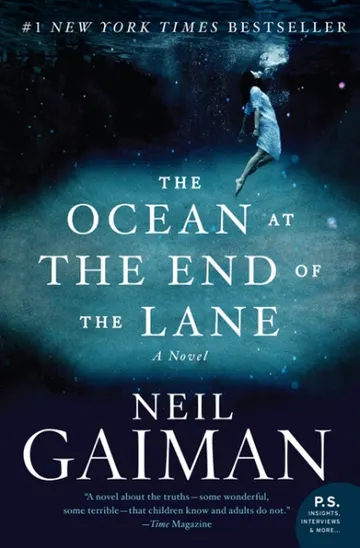
The most popular highlights from The Ocean at the End of the Lane, saved by readers on Screvi.
“I lived in books more than I lived anywhere else.”
“Grown-ups don't look like grown-ups on the inside either. Outside, they're big and thoughtless and they always know what they're doing. Inside, they look just like they always have. Like they did when they were your age. Truth is, there aren't any grown-ups. Not one, in the whole wide world.”
“I do not miss childhood, but I miss the way I took pleasure in small things, even as greater things crumbled. I could not control the world I was in, could not walk away from things or people or moments that hurt, but I took joy in the things that made me happy.”
“Books were safer than other people anyway.”
“Nobody looks like what they really are on the inside. You don’t. I don’t. People are much more complicated than that. It’s true of everybody.”
“Adults follow paths. Children explore. Adults are content to walk the same way, hundreds of times, or thousands; perhaps it never occurs to adults to step off the paths, to creep beneath rhododendrons, to find the spaces between fences. I was a child, which meant that I knew a dozen different ways of getting out of our property and into the lane, ways that would not involve walking down our drive.”
“Oh, monsters are scared," said Lettie. "That's why they're monsters.”
“I went away in my head, into a book. That was where I went whenever real life was too hard or too inflexible.”
“And did I pass?" The face of the old woman on my right was unreadable in the gathering dusk. On my left the younger woman said, "You don't pass or fail at being a person, dear.”
“Monsters come in all shapes and sizes. Some of them are things people are scared of. Some of them are things that look like things people used to be scared of a long time ago. Sometimes monsters are things people should be scared of, but they aren't.”
“I liked myths. They weren't adult stories and they weren't children's stories. They were better than that. They just were.”
“You don't pass or fail at being a person, dear.”
“Nothing's ever the same," she said. "Be it a second later or a hundred years. It's always churning and roiling. And people change as much as oceans.”
“Words save our lives, sometimes.”
“Different people remember things differently, and you'll not get any two people to remember anything the same, whether they were there or not.”
“That's the trouble with living things. Don't last very long. Kittens one day, old cats the next. And then just memories. And the memories fade and blend and smudge together.”
“Growing up, I took so many cues from books. They taught me most of what I knew about what people did, about how to behave. They were my teachers and my advisers.”
“. . . I lay on the bed and lost myself in the stories. I liked that. Books were safer than other people anyway.”
“I make art, sometimes I make true art, and sometimes it fills the empty places in my life. Some of them. Not all.”
“How can you be happy in this world? You have a hole in your heart. You have a gateway inside you to lands beyond the world you know. They will call you, as you grow.”
“I saw the world I had walked since my birth and I understood how fragile it was, that the reality was a thin layer of icing on a great dark birthday cake writhing with grubs and nightmares and hunger.”
“As we age, we become our parents; live long enough and we see faces repeat in time.”
“A story only matters, I suspect, to the extent that the people in the story change.”
“Adults should not weep, I knew. They did not have mothers who would comfort them.”
“Childhood memories are sometimes covered and obscured beneath the things that come later, like childhood toys forgotten at the bottom of a crammed adult closet, but they are never lost for good.”
“It's always too late for sorries, but I appreciate the sentiment.”
“I was a normal child. Which is to say, I was selfish and I was not entirely convinced of the existence of things that were not me, and I was certain, rock-solid, unshakeably certain, that I was the most important thing in creation. There was nothing that was more important to me than I was.”
“She was the storm, she was the lightning, she was the adult world with all its power and all its secrets and all its foolish casual cruelty.”
“Does it make you feel big to make a little boy cry?”
“Peas baffled me. I could not understand why grown-ups would take things that tasted so good raw, and then put them in tins, and make them revolting.”
Find Another Book
Search by title or author to explore highlights from other books.
More Books You Might Like
Explore highlights from similar books.