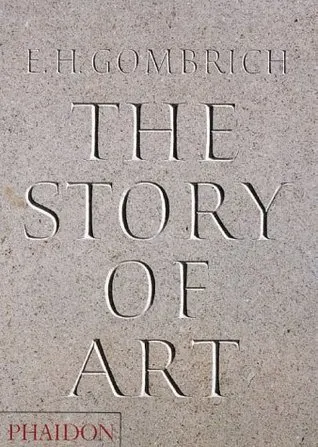
Key Insights & Memorable Quotes
The most popular highlights from The Story of Art, saved by readers on Screvi.
“One never finishes learning about art. There are always new things to discover.”
“...the whole story of art is not a story of progress in technical proficiency, but a story of changing ideas and requirements.”
“Actually I do not think that there are any wrong reasons for liking a statue or a picture. Someone may like a landscape painting because it reminds him of home, or a portrait because it reminds him of a friend. There is nothing wrong with that. All of us, when we see a painting, are bound to be reminded of a hundred-and-one things which influence our likes and dislikes. As long as these memories help us to enjoy what we see, we need not worry. It is only when some irrelevant memory makes us prejudiced, when we instinctively turn away from a magnificent picture of an alpine scene because we dislike climbing, that we should search our mind for the reason for the aversion which spoils a pleasure we might otherwise have had. There are wrong reasons for disliking a work of art.”
“Nature reflected in art always reflects the artist's own mind, his predilections, his enjoyments, and therefore his moods.”
“One Egyptian word for sculptor was actually 'He-who-keeps-alive.”
“A painting which represents a familiar subject in an unexpected way is often condemned for no better reason than that it does not seem right.”
“A művészet valójában nem létezik, csak művészek vannak. Régen az ilyen ember fogott egy marék színes agyagot, és bölényeket festett a barlang falára. A mai művészek többnyire boltban vásárolják a festéket, és talán plakátokat rajzolnak, vagy mást csinálnak, esetleg sok mindent a rajzoláson kívül, akárcsak a régiek. Nem hiba, ha az ilyen foglalkozásokat művészetnek mondjuk, csak nem szabad elfelejtenünk, hogy ez a szó koronként és helyenként mást-mást jelent, és az a bizonyos nagybetűs Művészet valójában nem létezik. Ez a nagybetűs Művészet ma már inkább valamilyen fantom vagy fétis. Vérig sértheted a művészt, ha azt mondod neki, hogy az, amit festett, mintázott, a maga nemében jó, csak éppen nem "művészet". És alaposan megzavarhatod azt, aki egy festményben gyönyörködik, ha közlöd vele, hogy ami neki annyira tetszik a képen, az nem a művészet, hanem valami más.”
“It is not their standard of craftmanship which is different from ours, but their ideas.”
“They may have heard that Rembrandt was famous for his chiaroscuro...so they nod wisely when they see a Rembrandt, mumble 'wonderful chiaroscuro,' and wander onto the next picture. I want to be quite frank about this danger of half-knowledge and snobbery, for we are all apt to succumb to such temptation.”
“the Egyptians had largely drawn what they knew to exist, the Greeks what they saw; in the Middle Ages the artist also learned to express in his picture what he felt”
“The old proverb that you cannot argue about matters of taste may well be true, but that should not conceal the fact that taste can be developed. This is again a matter of common experience which everybody can test in a modest field. To people who are not used to drinking tea one blend may taste exactly like the other. But, if they have the leisure, will and opportunity, to search out such refinements as there may be, they may develop into true connoisseur's who can distinguish exactly what type and mixture they prefer, and their greater knowledge is bound to add greatly to their enjoyment of the choicest blends.”
“Great works of art seem to look different each time one stands before them. They seem to be as inexhaustible and unpredictable as real human beings. It is an exciting world of its own with its own strange laws and its own adventures. Nobody should think he knows all about it, for nobody does.”
“I have tried to tell the Story of Art as the story of a continuous weaving and challenging of traditions in which each work refers to the past and points to the future. For there is no aspect of this story more wonderful than this-- that a living chain of tradition still links the art of our own days with that of the Pyramid age.”
“Actually I do not think that there are any wrong reasons for liking a statue or a picture. Someone may like a landscape painting because it reminds him of home, or a portrait because it reminds him of a friend. There is nothing wrong with that. All of us, when we see a painting, are bound to be reminded of a hundred-and-one things which influence out likes and dislikes. As long as these memories help up to enjoy what we see, we need not worry. It is only when some irrelevant memory makes us prejudiced, when we instinctively turn away from a magnificent picture of an alpine scene because we dislike climbing, that we should search our mind for the reason for the aversion which spoils a pleasure we might otherwise have had. There are wrong reasons for disliking a work of art.”
“The Egyptians held the belief that the preservation of the body was not enough. If the likeness of the king was also preserved, it was doubly sure that he would continue to exist for ever. So they ordered sculptors to chisel the king's head out of hard, imperishable granite, and put it in the tomb where no one saw it, there to work its spell and to help his soul to keep alive in and through the image. One Egyptian word for sculptor was actually 'He-who-keeps-alive'.”
“La plupart des gens aiment trouver dans un tableau ce qu'ils aiment dans la réalité.”
Find Another Book
Search by title or author to explore highlights from other books.
More Books You Might Like
Explore highlights from similar books.


