Key Insights & Memorable Quotes
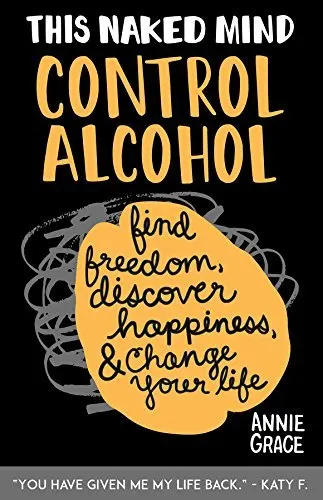
The most popular highlights from This Naked Mind: Control Alcohol, Find Freedom, Discover Happiness & Change Your Life, saved by readers on Screvi.
“Alcohol erases a bit of you every time you drink it. It can even erase entire nights when you are on a binge. Alcohol does not relieve stress; it erases your senses and your ability to think. Alcohol ultimately erases your self.”
“No one saves us but ourselves. No one can and no one may. We ourselves must walk the path.” —Buddha”
“First you take a drink, then the drink takes a drink, then the drink takes you.” – F. Scott Fitzgerald”
“It wasn’t that there was always a reason to drink. It was just that there was never a reason not to.”
“Scratching an itch is pleasurable, but you would never purposely sit in poison ivy just to scratch your ass.”
“if alcohol made you happy, every time you drank you should be full of happiness. Let me ask you, from a purely physiological perspective, how could alcohol possibly make you happy? The effect of alcohol is to deaden all of your senses, to numb you, to inebriate you. If you are numb, how can you feel anything, happiness included? Surely you are not happy every time you drink. None of us are proud of everything we have said or done while drinking. Yet in the moment we believe we are on top of the world, saying and doing anything we please, deluding ourselves into thinking it’s making us happy. Are you happy when the room starts to spin, or your dinner comes back up? Is the drunk on the street in Vegas who has lost his home and his family to booze truly happy? You might take issue with this and tell me that”
“Yesterday I was clever, so I wanted to change the world. Today I am wise, so I am changing myself.” – Rumi”
“You drink to end the distress. The drink itself does not provide enjoyment, but you sincerely enjoy ending the nuisance of wanting a drink. The relief is so strong you feel happy, even giddy. You drink to get the feeling of peace that someone who is not dependent on alcohol always feels.”
“For simplicity, let’s define addiction this way: doing something on a regular basis that you do not want to be doing. Or doing something more often than you would like to be doing it, yet being unable to easily stop or cut back. Basically, it’s having two competing priorities, wanting to do more and less of something at the same time. The”
“You drink to get the feeling of peace that someone who is not dependent on alcohol always feels.”
“After all, alcohol is the only drug on earth you have to justify not taking.”
“Our society not only encourages drinking—it takes issue with people who don’t drink.”
“Vale goes on to say, “When you stop putting a poison like alcohol in your body, it literally breathes a sigh of relief.”171”
“The reality, when the sexy advertisements have been stripped away, is that the actual product is ethanol.122 It is a horrible-tasting, addictive poison. So we sweeten it with sugar and flavoring or process it to make it more palatable.”
“A good marketer can sell practically anything to anyone. Tobacco is literally dried, decaying vegetable matter that you light on fire and inhale, breathing horrid-tasting, toxic fumes into your lungs.121 At one point marketers promoted smoking as a status symbol and claimed it had health benefits. Once you give it a try, the addictive nature of the drug kicks in, and the agency’s job becomes much easier. If they can get you hooked, the product will sell itself. Since the product is actually poison, advertisers need to overcome your instinctual aversion. That’s a big hill for alcohol advertisements to climb, which is why the absolute best marketing firms on the globe, firms with psychologists and human behavior specialists on staff, are hired to create the ads. These marketers know that the most effective sale is an emotional sale, one that plays on your deepest fears, your ultimate concerns. Alcohol advertisements sell an end to loneliness, claiming that drinking provides friendship and romance. They appeal to your need for freedom by saying drinking will make you unique, brave, bold, or courageous. They promise fulfillment, satisfaction, and happiness. All these messages speak to your conscious and unconscious minds.”
“the majority of drinkers believe they drink because they want to, they enjoy it, and they choose to do it.”
“We must be able, at any time, to accept the fact that we could all be absolutely and utterly wrong.”
“In any given moment, the more you focus on one aspect of your experience, the less you notice everything else.”
“Addiction begins with the hope that something ‘out there’ can instantly fill up the emptiness inside.” —Jean Kilbourne”
“Once we accept our limits, we go beyond them.” —Albert Einstein”
“The secret to happiness is freedom. The secret to freedom is courage.” —Carrie Jones”
“First you take a drink, then the drink takes a drink, then the drink takes you.” —F. Scott Fitzgerald”
“The world we have created is a process of our thinking. It cannot be changed without changing our thinking.” —Albert Einstein”
“Truth rests with the minority . . . because the minority is generally formed by those who really have an opinion.” —Søren Kierkegaard”
“Be patient with yourself. Self-growth is tender; it’s holy ground. There’s no greater investment.”
“Unconscious learning happens automatically and unintentionally through experiences, observations, conditioning, and practice.4 We’ve been conditioned to believe we enjoy drinking. We think it enhances our social life and relieves boredom and stress. We believe these things below our conscious awareness. This is why, even after we consciously acknowledge that alcohol takes more than it gives, we retain the desire to drink.”
“Existentialist psychotherapist Irvin D. Yalom identified what he calls humans’ ultimate concerns: death, isolation (loneliness), freedom, and meaning.118 These concerns reflect our deep fundamental needs. We search to understand the meaning of life, but no question provokes more debate. We feel desperate to experience gratification, so much so that we often rob ourselves of it by overindulging”
“Now, instead of comparing myself to other drinkers at social gatherings, I can compare my non-drinking self against my former, drinking self. It’s almost a joke how much more I enjoy my life. I actually know when I am having a good time, or a not-so-good time for that matter, but my emotions are one hundred percent mine.”
“We continue drinking unchecked, often overlooking the danger of addiction, because we have come to believe alcoholism can only happen to other people. By the time we realize we have a problem, we are faced with self-diagnosing a fatal and incurable illness or admitting to being weak-willed and lacking self-control. We tend to avoid this horrific diagnosis until things have gotten so out of control we can no longer avoid the problem. In some ways this approach has defined alcoholism as a disease of denial.”
“It’s not that alcohol makes drinkers happy; it’s that they are very unhappy without it.”
Find Another Book
Search by title or author to explore highlights from other books.
More Books You Might Like
Explore highlights from similar books.