6 Best Book Tracking Apps in 2026 (Goodreads Alternatives)
Book tracking apps had a strange couple of years.
Goodreads shipped its first redesign in two decades (July 2025) and most users opened the app to find the same app with a new logo. The StoryGraph crossed 5 million readers in January 2026, growing fastest every time Goodreads frustrated its own user base. Fable got acquired by Scribd in June 2025, a year after its AI reading summaries told one user not to forget "the occasional white author." And Goodreads finally added a Did Not Finish shelf in March 2026, roughly a decade after people started asking for one.
So if you're picking a book tracker in 2026, or finally leaving Goodreads, the options look different than they did two years ago. We checked every app on this list: current pricing, current features, what's been shipped recently, and what users actually complain about.
Here's a quick overview before the details:
| App | Best for | Price |
|---|---|---|
| Screvi | Remembering what you read | $6.99/mo, $59.99/yr, or $299 lifetime |
| The StoryGraph | The full Goodreads replacement | Free, Plus $4.99/mo or $49.99/yr |
| Goodreads | The biggest community | Free (ads) |
| Fable | Book clubs and social reading | Free, Plus $5.99/mo or $49.99/yr |
| Hardcover | Indie spirit and an open API | Free, Supporter $4.99/mo or $49.99/yr |
| Bookmory | Reading sessions and stats on mobile | Free (ads), Premium $3.49/mo or $30.99/yr |
1. Screvi
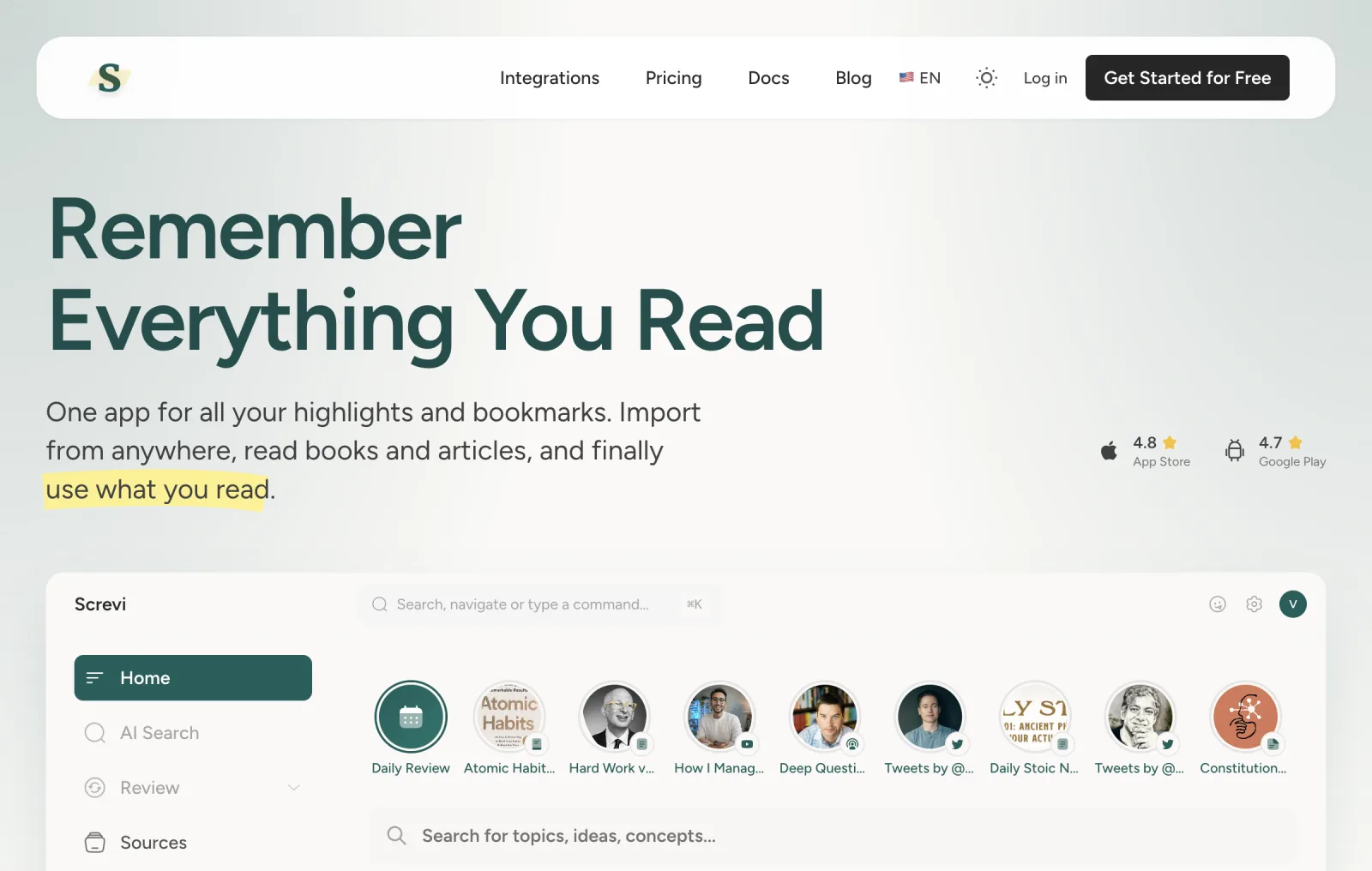
Most book trackers answer one question: what did you read? Screvi answers the harder one: what did you keep from it?
Screvi imports your Goodreads library and reading list, then connects the books you log to everything you highlighted inside them. Your Kindle, Kobo, and Apple Books highlights sync into one library, and a spaced repetition system (a modified SM-2 algorithm, the same science behind Anki) resurfaces your best passages at the right intervals so the books you tracked don't fade into a list of titles you vaguely remember.
What makes it stand out:
- Goodreads import. Bring over your library and reading list in a few clicks.
- Highlights from every source. Kindle, Kobo, Apple Books, articles, PDFs, and YouTube transcripts in one place.
- Spaced repetition built in. Daily review in-app, by email digest, or on the iOS home screen widget.
- AI semantic search. Ask "what did I read about habit formation?" and get answers from every book you've highlighted, not just keyword matches.
- A book tier list maker. Import your Goodreads books and rank them on a shareable tier board. More fun than a star rating, and more honest.
- Works everywhere. Web, iOS, Android, and browser extensions for Chrome and Firefox.
Pricing: 14-day free trial (no credit card), then $6.99/month, $59.99/year, or $299 lifetime. All features on every plan.
Best for: Readers who track books because they want the books to matter later. If your Goodreads "Read" shelf has 300 titles and you can quote almost none of them, this is the gap Screvi fills.
Consider this: Screvi doesn't try to be a social network. There are no book clubs or friend feeds. If you mainly want to see what your friends are reading, pair it with one of the apps below.
2. The StoryGraph
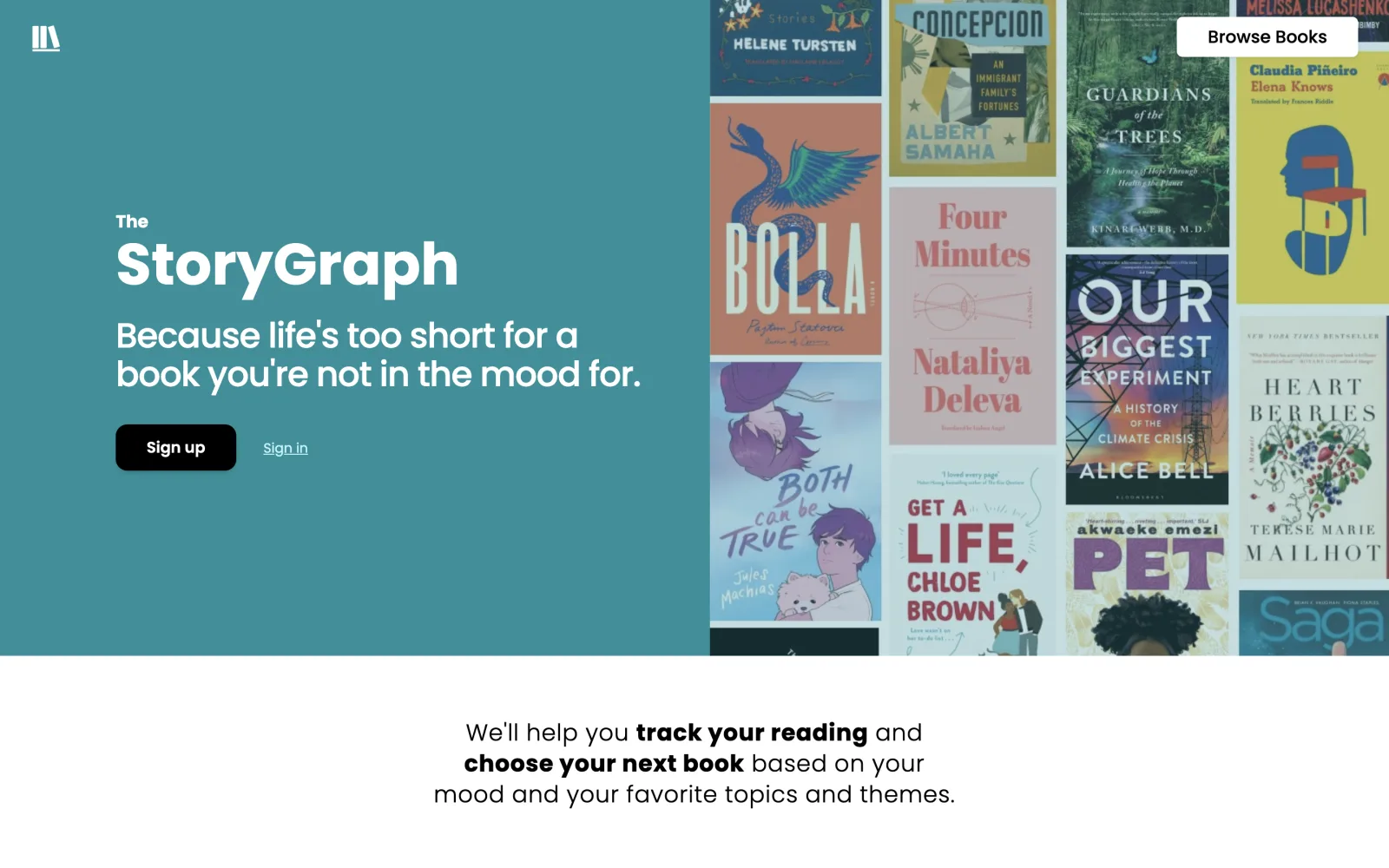
The StoryGraph is the app people mean when they say "Goodreads alternative." Founded in 2019 by software engineer Nadia Odunayo, independent, Black-owned, and pointedly Amazon-free, it passed 5 million signups in January 2026 and its iOS app won a 2025 App Store Award.
The core idea: track books by mood and pacing, not just genre and stars. Every book carries crowd-sourced tags like "emotional," "slow-paced," or "dark academia," plus content warnings categorized by severity. The stats pages are the best in the category, and the recommendation engine runs on your actual reading patterns (deliberately no generative AI, which the company treats as a feature).
Key features:
- Half-star and quarter-star ratings (Goodreads still only allows whole stars).
- Mood, pace, and genre tracking with detailed charts and a monthly wrap-up.
- Crowd-sourced content warnings on nearly every book.
- Buddy reads with up to 8 friends, with comments spoiler-locked to your progress percentage.
- Goodreads import, DNF tracking, and CSV export.
- Kobo eReader integration started rolling out in June 2026.
Pricing: The core tracker is free. StoryGraph Plus is $4.99/month or $49.99/year and adds advanced stats, custom charts, unlimited recommendations, and a vote on the roadmap.
Best for: Anyone leaving Goodreads who wants the full experience somewhere else, minus Amazon. It's the most complete replacement on this list and the only one with a real shot at matching Goodreads' catalog depth.
Consider this: The app has a reputation for bugs (hanging loading screens, search hiccups), and the social side is much quieter than Goodreads. There's also no Kindle auto-sync, so your reading progress is yours to log.
3. Goodreads
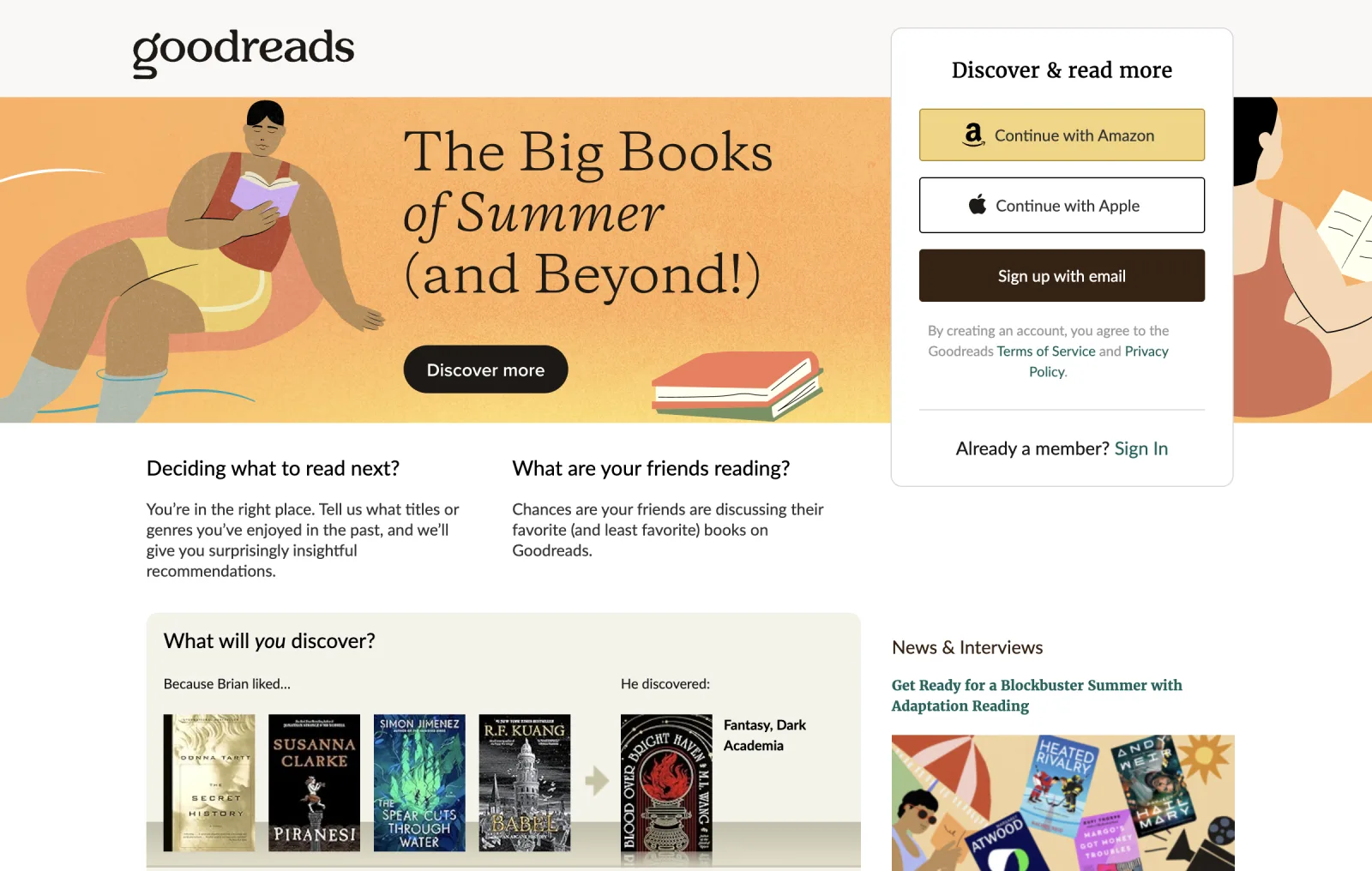
Still the default, still enormous. Goodreads has cited more than 150 million members (a 2023 figure it hasn't updated), and no competitor comes close on catalog size, review volume, or the simple fact that your friends are probably already there.
The last two years brought more movement than the previous ten: a full visual redesign in July 2025 (new logo, new illustrations, seasonal Reading Challenge badges) and a Did Not Finish shelf in March 2026, one of the most requested features in the site's history. Whether that counts as momentum or catch-up is up to you.
Key features:
- The annual Reading Challenge, now with seasonal badges and friends' progress.
- The largest book database and review archive anywhere.
- Built-in Kindle integration: update progress and rate books straight from the device.
- Giveaways, author Q&As, and the volunteer librarian system.
- The new DNF shelf (your custom "abandoned" shelf converts automatically).
Pricing: Free, supported by ads and Amazon affiliate links.
Best for: Readers who want the biggest community and live inside the Kindle ecosystem. The device integration is something no other app on this list can offer, because Amazon owns both ends.
Consider this: Still no half-star ratings, still no dark mode, and the 2025 redesign changed the paint, not the plumbing. Review bombing remains a known problem, and exporting your data is all-or-nothing with a famously messy CSV. If you ever want to leave, leaving is the hardest part.
4. Fable
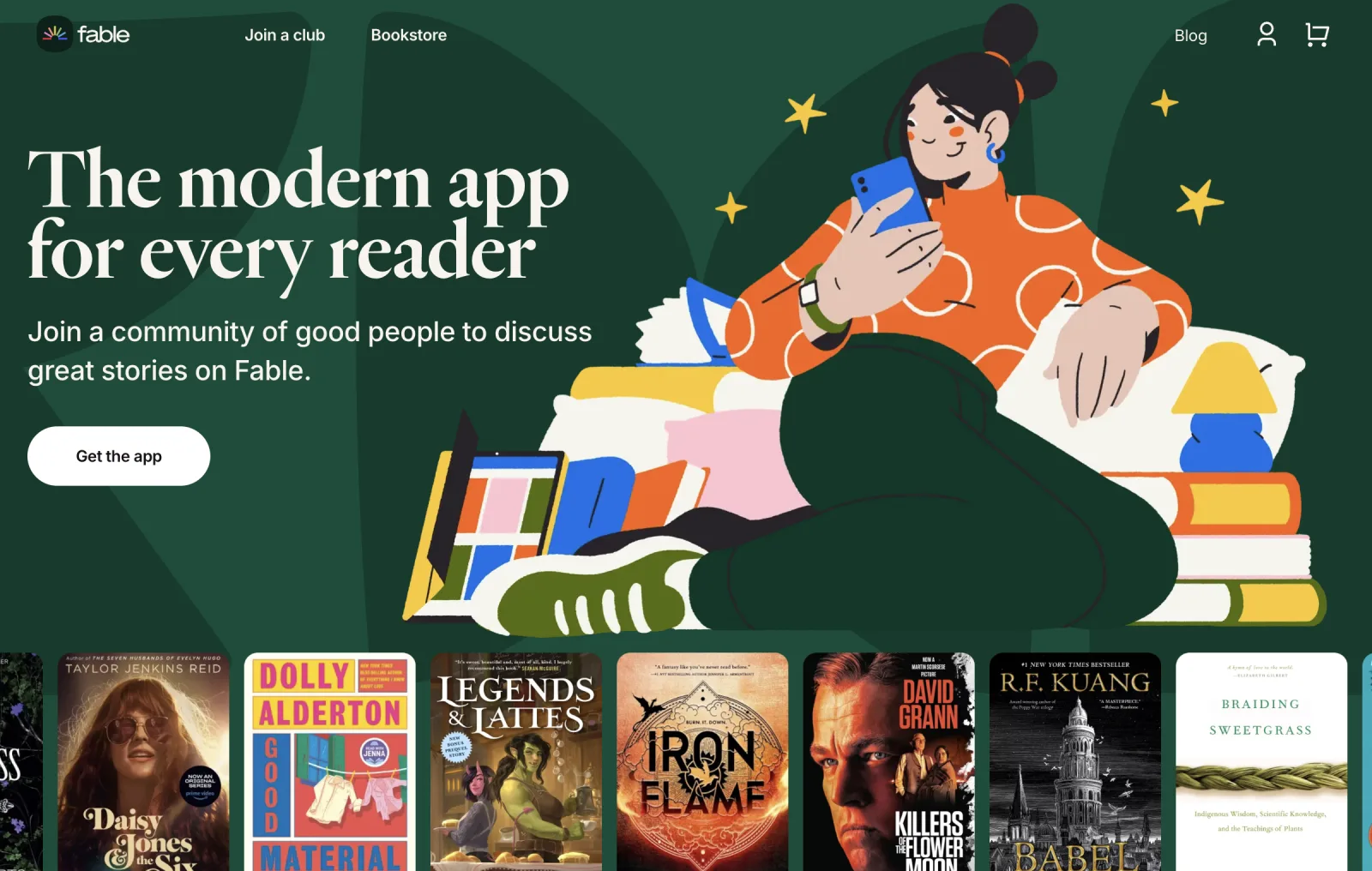
Fable is the social one. Built around book clubs (over 100,000 of them at last count) led by authors, BookTok creators, and celebrities, it treats reading as something you do with other people. It also tracks TV shows alongside books, which sounds odd until you realize most book clubs end up talking about adaptations anyway.
Two big things happened recently. In January 2025, Fable's AI-generated year-end reader summaries produced racially insensitive remarks and the company removed generative AI from the platform entirely. Then in June 2025, Scribd acquired Fable, and in June 2026 the combined company launched a bundle: Everand's ebook and audiobook library plus Fable's clubs in one subscription.
Key features:
- Thousands of free book clubs, plus buddy reads you create yourself.
- Reading goals, daily streaks, and shareable stats.
- An integrated ebook reader where highlights and comments from your club appear inline, chapter by chapter.
- Folios: curated reading lists from authors and public figures.
- Books and TV tracking in one app.
Pricing: Free tier with tracking and free clubs. Fable Plus is $5.99/month or $49.99/year (advanced stats, custom goals, no ads). Premium clubs run $5.99 to $9.99/month each. The new Everand bundle starts at $11.99/month and includes Plus.
Best for: Readers who finish a book and immediately need someone to talk to about it. Nothing else on this list comes close for structured group reading.
Consider this: The free tier is thin, there's no trial for Plus, and engagement inside big clubs can be sparse (thousands of members, dozens of comments). And it's now a corporate product inside Scribd, with the bundle push to match.
5. Hardcover
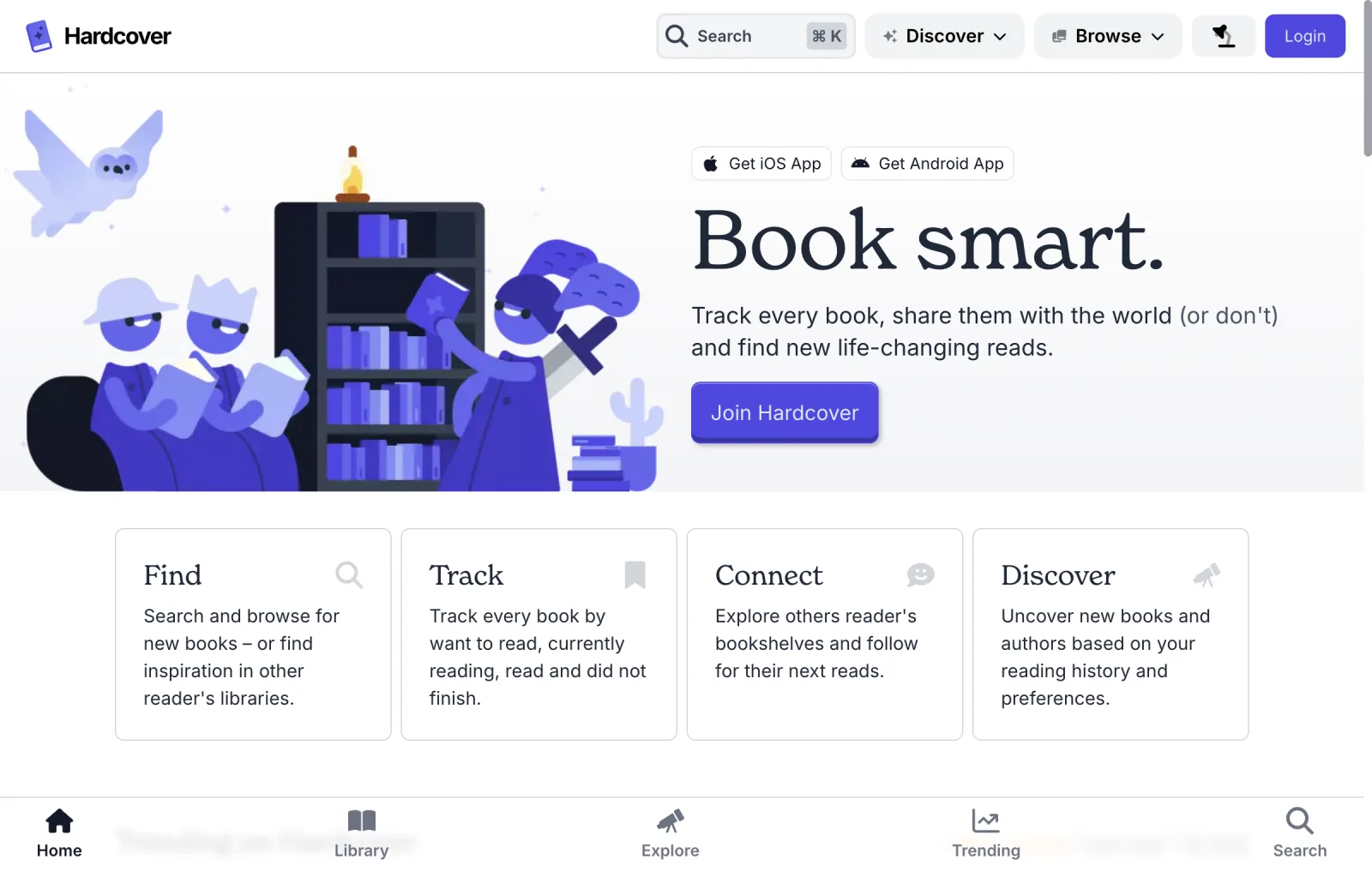
Hardcover is the indie pick, built by a small team around founder Adam Fortuna, with a public roadmap, monthly dev reports, and an income transparency page where you can see exactly what the app earns. It was designed explicitly as a Goodreads replacement, down to rebuilding the thing Amazon killed for developers: an open API.
Key features:
- Four reading statuses (including Did Not Finish), half-star ratings, and per-book privacy controls.
- Custom lists you can share and browse, a "For You" feed, and trending books.
- A Spotify-style "Wrapped" at the end of every year.
- Imports from Goodreads, StoryGraph, and CSV.
- A free public GraphQL API, the same one that powers the apps. If you want to build your own reading dashboard, this is the only tracker that invites you to.
Pricing: Free, with no caps on core tracking. The Supporter plan ($4.99/month or $49.99/year) adds librarian editing access, priority support, and Discord perks, and exists mostly to fund the project. 1% of subscriptions goes to carbon removal.
Best for: Readers who want their tracker independent and hackable, and developers who miss the Goodreads API. The community on Discord is small and friendly.
Consider this: The catalog is smaller than Goodreads' or StoryGraph's, and you'll hit the occasional rough edge or bug. It's a small team and it shows in both the good ways and the inconvenient ones.
6. Bookmory
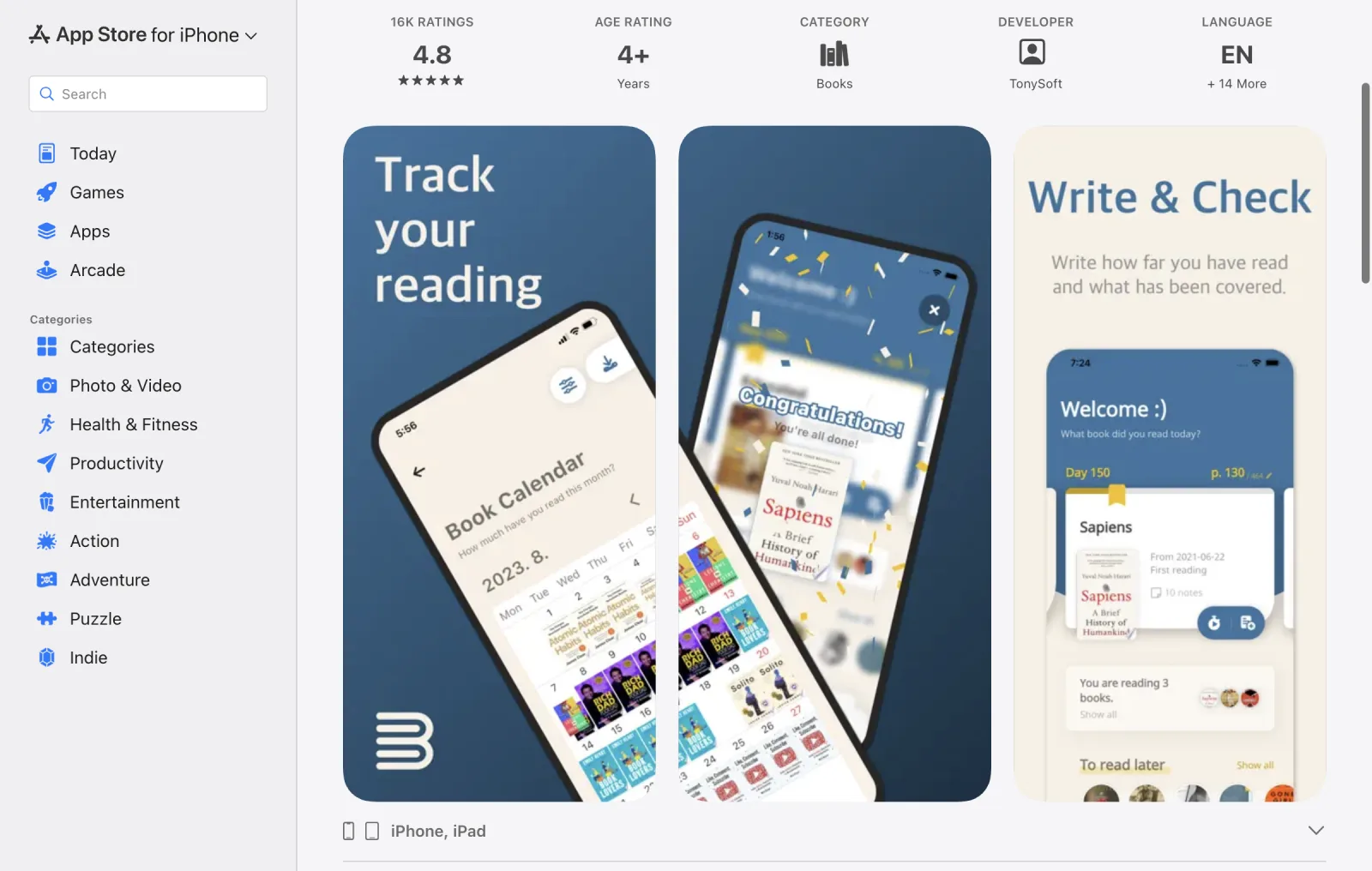
Bookmory is a different species: a mobile-only reading tracker by a solo developer in Seoul (Dong Su Mun of TonySoft), sitting at 4.8 stars from over 16,000 ratings on the App Store. Where the other apps track which books you read, Bookmory tracks how you read them: sessions, minutes, pages per day.
Key features:
- A reading timer with iOS Live Activity support, so your session runs on the lock screen.
- A calendar view that spreads your book covers across the month. The single most loved feature in reviews.
- Daily and yearly goals, weekly streaks, and stats down to how much money you've spent on books.
- Quote capture with OCR: photograph a page and extract the text.
- Barcode scanning, series and collection management, and a wishlist.
Pricing: Free with ads (series tracking capped around 5 books). Premium is $3.49/month or $30.99/year and removes ads and adds automatic cross-device sync.
Best for: Readers building a daily reading habit who want session-level data. If you like what apps like Strava do for running, Bookmory does that for reading.
Consider this: It's mobile-only, the Goodreads import is unreliable (users report losing titles), and there's no social layer at all. Everything is manual entry, which is either a dealbreaker or exactly the point.
How to choose
Leaving Goodreads and want everything it did, without Amazon? The StoryGraph. It's the most complete alternative and the momentum is real.
Staying put? Goodreads still has the people and the Kindle integration. The DNF shelf even suggests someone's listening again.
Read for the discussion? Fable's book clubs are the best structured social reading anywhere.
Want indie ownership and an API? Hardcover, and the Supporter plan is the cheapest way to feel good about where your money goes.
Building a daily habit? Bookmory turns reading sessions into streaks and stats.
Want the books to actually stick? That's the part every tracker skips. Logging a book takes five seconds; remembering it takes a system. Screvi imports your Goodreads library, syncs your Kindle and Kobo highlights, and brings back the best of what you read until it stays.