Key Insights & Memorable Quotes
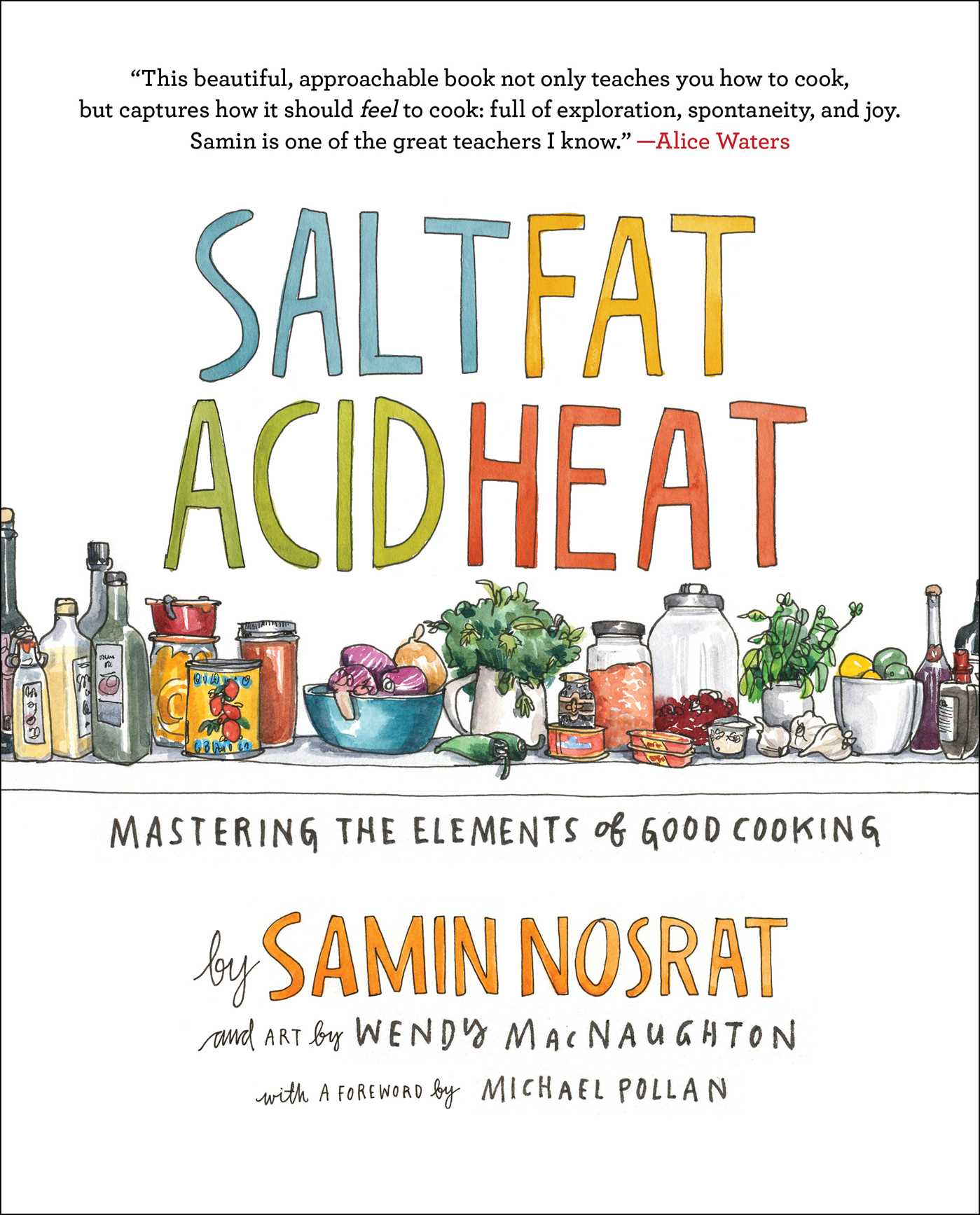
The most popular highlights from Salt, Fat, Acid, Heat: Mastering the Elements of Good Cooking, saved by readers on Screvi.
“When aspiring chefs ask me for career advice, I offer a few tips: Cook every single day. Taste everything thoughtfully. Go to the farmers’ market and familiarize yourself with each season’s produce. Read everything Paula Wolfert, James Beard, Marcella Hazan, and Jane Grigson have written about food. Write a letter to your favorite restaurant professing your love and beg for an apprenticeship. Skip culinary school; spend a fraction of the cost of tuition traveling the world instead.”
“Season food with the proper amount of salt at the proper moment; choose the optimal medium of fat to convey the flavor of your ingredients; balance and animate those ingredients with acid; apply the right type and quantity of heat for the proper amount of time—do all this and you will turn out vibrant and beautiful food, with or without a recipe.”
“Let all meats—except for the thinnest cuts—come to room temperature before you cook them. The larger the roast, the earlier you can pull it out of the fridge. A rib roast should sit out for several hours, while a chicken needs only a couple,”
“Get used to the way the salt falls from your hands; experience the illicit thrill of using so much of something we’ve all been taught to fear.”
“As I traveled, I noticed that in every country, whether I was watching home cooks or professional chefs, and whether they were cooking over live fire or on a camp stove, the best cooks looked at the food, not the heat source. I saw how good cooks obeyed sensory cues, rather than timers and thermometers. They listened to the changing sounds of a sizzling sausage, watched the way a simmer becomes a boil, felt how a slow-cooked pork shoulder tightens and then relaxes as hours pass, and tasted a noodle plucked from boiling water to determine whether it’s al dente. In order to cook instinctually, I needed to learn to recognize these signals. I needed to learn how food responds to the fourth element of good cooking: Heat.”
“Though we typically turn to sugar to balance out bitter flavors in a sauce or soup, it turns out that salt masks bitterness much more effectively than sugar. See for yourself with a little tonic water, Campari, or grapefruit juice, all of which are both bitter and sweet. Taste a spoonful, then add a pinch of salt and taste again. You’ll be surprised by how much bitterness subsides.”
“As oil is heated, it breaks down, leading to flavor degradation and the release of toxic chemicals. Food is also more likely to stick to a cold pan—another reason to preheat. But exceptions to the preheating rule exist: butter and garlic. Both will burn if the pan is too hot, so you must heat them gently. In all other cooking, preheat the pan and then add the fat, letting it too heat up before adding any other ingredients.”
“Play to each element’s strengths: use Salt to enhance, Fat to carry, and Acid to balance flavor.”
“recipes lead us to believe that cooking is a linear process, while most good food results from a circular one; like a spiderweb, touch one part and the entire thing will quiver.”
“For dishes from around the world: Cecilia Chiang and Fuschia Dunlop (China), Julia Child and Richard Olney (France), Madhur Jaffrey and Niloufer Ichaporia King (Indian Subcontinent), Najmieh Batmanglij (Iran), Ada Boni and Marcella Hazan (Italy),”
“The three basic decisions involving salt are: When? How much? In what form?”
“My general ratios for measuring salt are simple: 1 percent salt by weight for meats, vegetables, and grains, and 2 percent salinity for water for blanching vegetables and pasta.”
“When solid, it’s called pork fat. Liquid, it’s called lard.”
“Buy the best you can afford • Extra-virgin Olive Oil, pressed in the last calendar year • Whole chunks of Parmigiano-Reggiano from Italy • Chocolate and Cocoa Powder Buy whole and prepare yourself • Pick and chop fresh herbs (and always use Italian or flat-leaf parsley). • Juice lemons and limes • Peel, chop, and pound garlic • Grind spices • Soak, rinse, filet, and chop salt-packed anchovies • Make chicken stock when you can (see for a recipe). Or buy fresh or frozen stock from your butcher, rather than the boxed or canned stuff”
“Beef When solid, it’s called suet. Liquid, it’s called tallow.”
“When you can, use the same kind of acid for cooking and garnishing—”
“Spreading a rumor of tropical flavor to any dish where it’s used, coconut oil tastes particularly good in granola, or as the cooking fat for roasted root vegetables.”
“Claudia Roden, and Paula Wolfert (Mediterranean), Diana Kennedy and Maricel Presilla (Mexico), Andy Ricker and David Thompson (Thailand), Andrea Nguyen and Charles Phan (Vietnam). For general cooking: James Beard, April Bloomfield, Marion Cunningham, Suzanne Goin, Edna Lewis, Deborah Madison, Cal Peternell, David Tanis, Alice Waters, The Canal House, and The Joy of Cooking. For inspiring writing about food and cooking: Tamar Adler, Elizabeth David, MFK Fisher, Patience Gray, Jane Grigson, and Nigel Slater. For baking: Josey Baker, Flo Braker, Dorie Greenspan, David Lebovitz, Alice Medrich, Elisabeth Prueitt, Claire Ptak, Chad Robertson, and Lindsey Shere.”
“Always toast in a single layer, stir often, and pull bits and pieces as they are done. Toast thin slices of bread, to be smeared with chicken liver paste or fava bean purée at medium-low heat (about 350°F) so they don’t burn or dry out, which will result in mouth-damaging shards. Thicker slices of bread, to be topped with poached eggs and greens or tomatoes and ricotta, can be toasted at high heat (up to 450°F), or on a hot grill, so they brown quickly on the surface and remain chewy in the center. At 450°F and above, coconut flakes, pine nuts, and bread crumbs will go from perfect to burnt in the time it takes to sneeze. Knock 50 to 75°F off the temperature, and you’ll buy yourself the luxury of time. If a sneezing fit hits, your toasted foods will be safe. And when you deem the toastiness of these delicate foods sufficient, remove them from their hot trays (not doing so may lead to carryover and your perfectly toasted food will blacken while your back is turned).”
“Fry leftover rice in toasted sesame oil with an egg and kimchee for a Korean-inspired snack.”
“salt, which enhances flavor; fat, which amplifies flavor and makes appealing textures possible; acid, which brightens and balances; and heat, which ultimately determines the texture of food.”
“Combine steaming with the browning that comes from intense heat in a method I like to call steamy sauté. It’s perfect for cooking dense vegetables such as fennel or carrots: add a half inch of water, salt, a generous splash of olive oil or knob of butter, and aromatics into a pan filled with a single layer of vegetables, and place a lid on ajar. Simmer until the vegetables are tender, remove the lid, pour off any excess water, then turn up the heat and let the Maillard reaction commence.”
“Over the years, I’ve found that vegetables with higher water content, like asparagus and perfect little haricots verts, carry over more than denser, less watery ones, so pull them from the pot just before they’re done. Root vegetables, such as carrots and beets, won’t carry over even if you beg them to so always boil them until they are tender throughout.”
“Steam little potatoes in the oven by placing them in a single layer in a roasting dish, seasoning with salt, and adding any aromatics—a sprig of rosemary and a few garlic cloves will do. Add just enough water to cover the bottom of the pan, and tightly seal it up with aluminum foil. Cook until the potatoes present no resistance when pierced with a knife, and then serve with flaky salt and butter or garlicky aïoli alongside hard-cooked eggs or grilled fish.”
“Crack 4 eggs into a bowl and season them with salt and a few drops of lemon juice, whisking thoroughly to break them up. Gently melt a little butter in a saucepan over the lowest possible heat and pour in the eggs. Continue to stir with a whisk or a fork, while adding 4 or more tablespoons of butter in thumb-size pieces, letting each be absorbed before you add the next. Never stop stirring, and be patient. It’ll take several minutes for the eggs to start to come together. When they do, pull them from the stove in anticipation of the cooking that will continue due to residual heat. Serve with—what else?—buttered toast.”
“Roasted carrots, cauliflower, and broccoli—or anything that’s developed sweetness from browning—will always appreciate a squeeze of lemon or touch of vinegar. A little will go a long way.”
“Brown butter is a classic flavor in French and northern Italian cooking—particularly apt for pairing with hazelnuts, winter squash and sage, as I like to do in Autumn Panzanella, which is dressed with a Brown Butter Vinaigrette.”
“Garnish soft comfort foods with crunchy crumbs, toasted nuts, or crisp bits of bacon to make things interesting. Serve rich meats with bright, acidic sauces and clean-tasting blanched or raw vegetables. Serve mouth-drying starches with mouthwatering sauces, and recognize that a well-dressed, juicy salad can serve as both a side dish and a sauce. On the other hand, pair simply cooked meats, such as grilled steak or poached chicken, with roasted, sautéed, or fried vegetables glazed with Maillard’s dark lacquer. Let the seasons inspire you; foods that are in season together naturally complement one another on the plate. For example, corn, beans, and squash grow as companions in the field, then the three sisters find their way together into succotash. Tomatoes, eggplant, zucchini, and basil become ratatouille, tian, or caponata depending on where you are on the Mediterranean coast. Sage, a hardy winter herb, is a natural complement to winter squash because its leaves—and its flavor—stand up to the cold of winter.”
“To fry the perfect egg, heat a small pan over high heat, further than you normally might, add enough fat to coat the pan, and crack in the egg. Add a small amount of butter and, tipping the pan with one hand, spoon the melting butter onto the egg white with the other hand. This bastes the egg so the top and the bottom of the white cook at the same rate, and the yolk just barely sets.”
“Potatoes, too, are at their sweetest when first harvested—hence the indescribable pleasure of boiled new potatoes topped with butter. As potatoes sit in storage all year, though, their sugars convert to starches. Fry newly dug potatoes, full of sugar, and they’ll burn before they can cook through. Instead, when making potato chips or fries, use starchy, older potatoes and rinse them of excess starches after slicing until the water runs clear. Only then will your fried potatoes emerge from the hot oil of the fry pot crisp but not burnt.”
Find Another Book
Search by title or author to explore highlights from other books.
More Books You Might Like
Explore highlights from similar books.


