Key Insights & Memorable Quotes
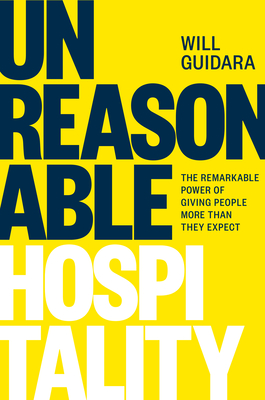
The most popular highlights from Unreasonable Hospitality: The Remarkable Power of Giving People More Than They Expect, saved by readers on Screvi.
“Black and white” means you’re doing your job with competence and efficiency; “color” means you make people feel great about the job you’re doing for them. Getting the right plate to the right person at the right table is service. But genuinely engaging with the person you’re serving, so you can make an authentic connection—that’s hospitality.”
“hire those who were curious about what they didn’t know and generous with what they did.”
“The One Minute Manager by Ken Blanchard and Spencer Johnson. I still give The One Minute Manager to every person I promote. It’s an amazing resource, in particular on how to give feedback. My biggest takeaways were: Criticize the behavior, not the person. Praise in public; criticize in private. Praise with emotion, criticize without emotion.”
“Tell them what you’re going to tell them, tell them, then tell them what you’ve told them.”
“What criticism offers you, then, is an invitation to have your perspective challenged—or at least to grow by truly considering it. You might stick with a choice you’ve been criticized for or end up somewhere completely different. The endgame isn’t the point as much as the process: you grow when you engage with another perspective and decide to decide again.”
“Some of the best advice I ever got about starting in a new organization is: Don’t cannonball. Ease into the pool. I’ve passed this advice on to those joining my own: no matter how talented you are, or how much you have to add, give yourself time to understand the organization before you try to impact”
“In my experience, people usually want to be heard more than they want to be agreed with. Even if neither of them managed to change the other’s mind, at the very least they’d have shown each other respect by taking the time to listen.”
“That’s one small example, of a thousand that might happen over the course of an evening, of how a trusting team operates. And it’s why hiring is such a sobering responsibility. Because when you’re hiring, you’re hiring not only the people who are going to represent and support you, but the people who are going to represent and support the team already working for you. Morale is fickle, and even one individual can have an outsize and asymmetrical impact on the team, in either direction. Bring in someone who’s optimistic and enthusiastic and really cares, and they can inspire those around them to care more and do better. Hire someone lazy, and it means your best team members will be punished for their excellence, picking up the slack so the overall quality doesn’t drop. At the end of the day, the best way to respect and reward the A players on your team is to surround them with other A players. This is how you attract more A players. And it means you must invest as much energy into hiring as you expect the team to invest in their jobs. You cannot expect someone to keep giving all of themselves if you put someone alongside them who isn’t willing to do the same. You need to be as unreasonable in how you build your team as you are in how you build your product or experience. It’s also why you’ve got to hire slow. It’s so dreadful to be shorthanded that managers tend to rush in and find a body to fill the void. I know what it’s like to think, We need someone so desperately—how bad could this person be?”
“Start with what you want to achieve, instead of limiting yourself to what’s realistic or sustainable”
“Hire Slow, Fire Fast—But Not Too Fast”
“People will forget what you do; they’ll forget what you said. But they’ll never forget how you made them feel.” This quote, often (but probably incorrectly) attributed to the great American writer Maya Angelou, may be the wisest statement about hospitality ever made.”
“Intention means every decision, from the most obviously significant to the seemingly mundane, matters.”
“This is what I would later call the Rule of 95/5: Manage 95 percent of your business down to the penny; spend the last 5 percent “foolishly.” It sounds irresponsible; in fact, it’s anything but. Because that last 5 percent has an outsize impact on the guest experience, it’s some of the smartest money you’ll ever spend.”
“It’s only demeaning to suck it up if you take it personally. Saying sorry, I reminded the team, doesn’t mean you’re wrong.”
“My favorite was “Make the charitable assumption,” a reminder to assume the best of people, even when (or perhaps especially when) they weren’t behaving particularly well.”
“Sometimes the best time to promote people is before they are ready.”
“What would you attempt to do if you knew you could not fail?”
“When you ask, “Why do we do it this way?” and the only answer is “Because that’s how it’s always been done,” that rule deserves another look.”
“You’re not always going to agree with everything you hear, but you’ve got to start by listening.”
“no aspect of your business should be off-limits to reevaluation.”
“Gary Chapman saved a lot of romantic relationships with his 1992 book, The Five Love Languages, which delineates the five general ways people show and prefer to experience love. (They are: acts of service, gift-giving, physical touch, quality time, and words of affirmation.)”
“MAKING MAGIC IN A WORLD THAT COULD USE MORE OF IT”
“Former navy captain David Marquet says that in too many organizations, the people at the top have all the authority and none of the information, while the people on the front line have all the information and none of the authority.”
“Danny’s partner Richard Coraine would often tell us, “All it takes for something extraordinary to happen is one person with enthusiasm.” Randy was that person.”
“As our focus on Unreasonable Hospitality grew, we were always looking for a way to “plus one” the experience—to give people a little more than they expected—by staying alert to recurring situations.”
“A leader’s role isn’t only to motivate and uplift; sometimes it’s to earn the trust of your team by being human with them.”
“identify moments that recur in your business, and build a tool kit your team can deploy without too much effort.”
“One of Richard Coraine’s most often repeated sayings was “One size fits one.” He was referring to the hospitality experience: some guests love it when you hang out at the table and schmooze, while others want you to take their order and disappear. It’s your job to read the guest and to serve them how they want to be served.”
“in too many organizations, the people at the top have all the authority and none of the information, while the people on the front line have all the information and none of the authority.”
“The customer isn’t always right, and it’s unhealthy for everyone if you don’t have clear and enforced boundaries for yourself and your staff as to what is unacceptable behavior.”
Find Another Book
Search by title or author to explore highlights from other books.
More Books You Might Like
Explore highlights from similar books.