Key Insights & Memorable Quotes
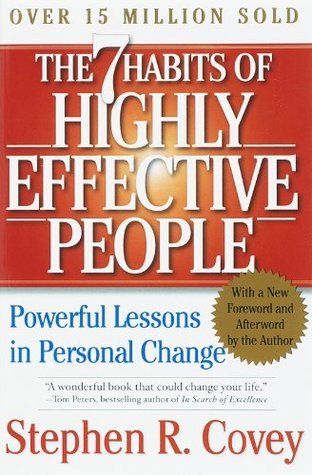
The most popular highlights from The 7 Habits of Highly Effective People: Powerful Lessons in Personal Change, saved by readers on Screvi.
But until a person can say deeply and honestly, "I am what I am today because of the choices I made yesterday," that person cannot say, "I choose otherwise.
Most people do not listen with the intent to understand; they listen with the intent to reply.
Treat a man as he is and he will remain as he is. Treat a man as he can and should be and he will become as he can and should be.
Start with the end in mind.
To change ourselves effectively, we first had to change our perceptions.
We see the world, not as it is, but as we are──or, as we are conditioned to see it.
Habit 1: Be ProactiveHabit 2: Begin with the End in MindHabit 3: Put First Things FirstHabit 4: Think Win/WinHabit 5: Seek First to Understand, Then to Be UnderstoodHabit 6: SynergizeHabit 7: Sharpen the Saw
When the trust account is high, communication is easy, instant, and effective.
Two people can see the same thing, disagree, and yet both be right. It's not logical; it's psychological.
Sow a thought, reap an action; sow an action, reap a habit; sow a habit, reap a character; sow a character, reap a destiny.
It's not what happens to us, but our response to what happens to us that hurts us.
My wife and I just don't have the same feelings for each other we used to have. I guess I just don't love her anymore and she doesn't love me. What can i do?""The feeling isn't there anymore?" I asked."That's right," he reaffirmed. "And we have three children we're really concerned about. What do you suggest?""love her," I replied."I told you, the feeling just isn't there anymore.""Love her.""You don't understand. the feeling of love just isn't there.""Then love her. If the feeling isn't there, that's a good reason to love her.""But how do you love when you don't love?" "My friend , love is a verb. Love - the feeling - is a fruit of love, the verb. So love her. Serve her. Sacrifice. Listen to her. Empathize. Appreciate. Affirm her. Are you willing to do that?
If I really want to improve my situation, I can work on the one thing over which I have control - myself.
to learn and not to do is really not to learn. To know and not to do is really not to know.
Happiness, like unhappiness, is a proactive choice.
It is one thing to make a mistake, and quite another thing not to admit it. People will forgive mistakes, because mistakes are usually of the mind, mistakes of judgment. But people will not easily forgive the mistakes of the heart, the ill intention, the bad motives, the prideful justifying cover-up of the first mistake.
Habit is the intersection of knowledge (what to do), skill (how to do), and desire (want to do).
Love is a verb. Love – the feeling – is the fruit of love the verb or our loving actions. So love her. Sacrifice. Listen to her. Empathize. Appreciate. Affirm her.
At some time in your life, you probably had someone believe in you when you didn't believe in yourself.
The ability to subordinate an impulse to a value is the essence of the proactive person.
Courage isn't absenct of fear, it is the awareness that something else is important
Ineffective people live day after day with unused potential.
Our behavior is a function of our decisions, not our conditions.
Admission of ignorance is often the first step in our education.
As you care less about what people think of you, you will care more about what others think of themselves.
There's no better way to inform and expand you mind on a regular basis than to get into the habit of reading good literature.
How you treat the one reveals how youregard the many, because everyone is ultimately a one.
How different our lives are when we really know what is deeply important to us, and keeping that picture in mind, we manage ourselves each day to be and to do what really matters most.
People can't live with change if there's not a changeless core inside them.
Find Another Book
Search by title or author to explore highlights from other books.
More Books You Might Like
Explore highlights from similar books.


