Key Insights & Memorable Quotes
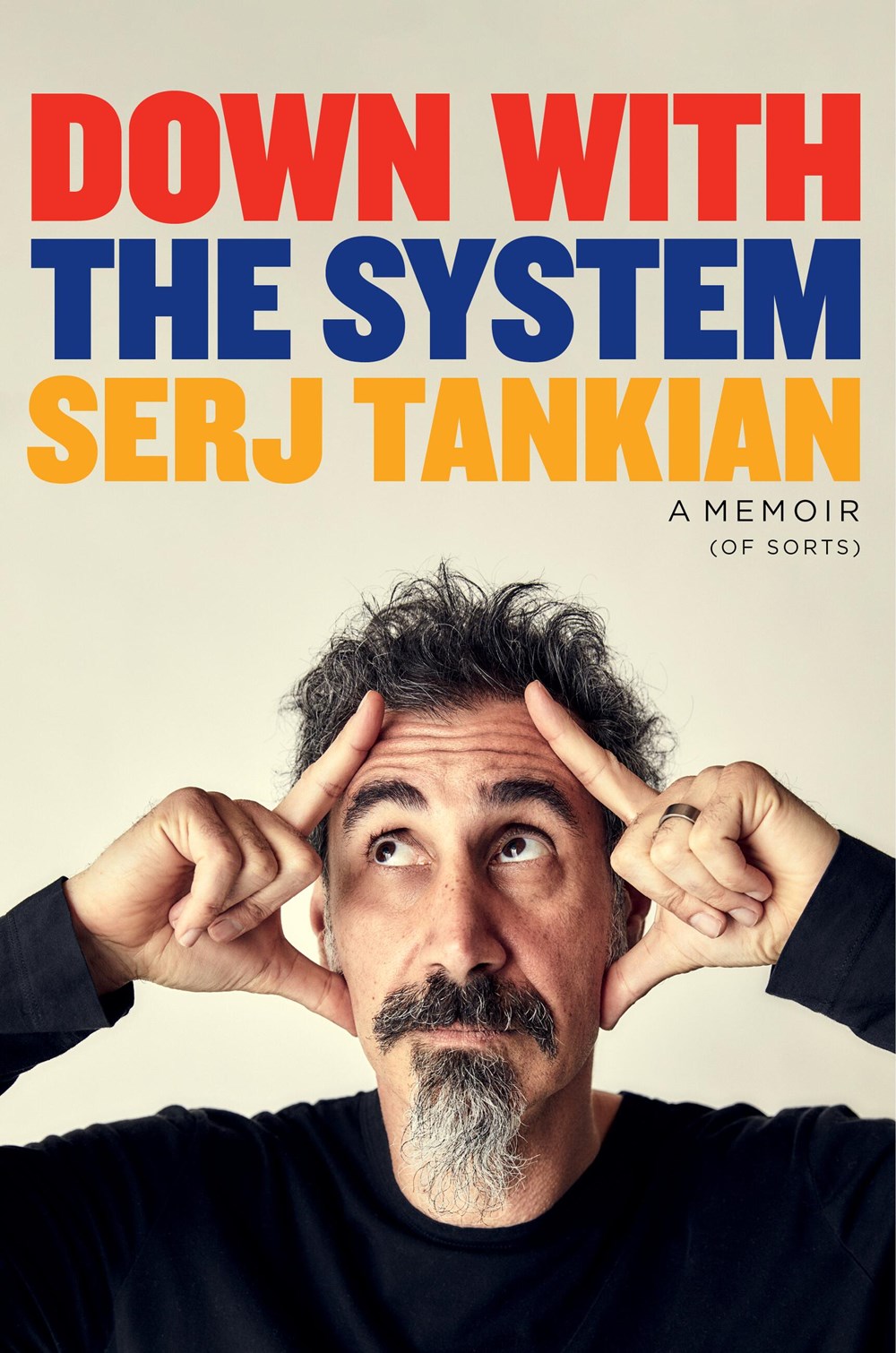
The most popular highlights from Down with the System: A Memoir, saved by readers on Screvi.
If genocide is ultimately an act of erasure, denial is its final, comprehensive deed.
I asked John how he was able to fall asleep so easily on the road. His response is engraved into my memory. He turned to me casually and said, “I just imagine large planes bombing the shit out of the whole planet to a point where there is nothing to think of, and then I gently go to sleep.” My jaw dropped. What the fuck, psycho? That was John.
Everyone is born pure, and it’s the very act of living—fighting for our survival—that beats the purity and goodness out of us.
I’ve always felt that on the day of reckoning, if there is one, we will not be divided into believers and nonbelievers, but instead we’ll be divided between those who truly feel at one with all beings and the universe, and those who don’t.
Is the stress of injustice really something we should aim to alleviate? Shouldn't we feel as much of that pain and stress as we can bear so that we're moved to fix it?
The American Dream is often portrayed as an upward climb – hard, for sure, but always ascending to greater heights. In fact, as I came to understand it, the American Dream is more like a rollercoaster, with towering peaks, deep valleys, and all sorts of sharp twists and turns in between. And like a rollercoaster, the ride itself could be disorienting enough to make you sick.
The nineteenth-century French novelist Gustave Flaubert once wrote, “Be regular and orderly in your life so that you may be violent and original in your work.” That was a lot closer to my way of thinking than bloodying my bandmates to settle petty disputes. Of course, Flaubert never opened for Slayer.
The importance of having the guts to say “yes” to the things that turn you on is matched only by the impact of learning how to say “no” to the things that don’t.
In some ways, the idea of a person arriving in the US with a few hundred dollars to his name, a family to feed, and an inability to speak fluent English quickly going on to start his own successful business just a few years later feels almost superhuman. In fact, it's what immigrants do all the time. Perhaps the idea of America as a land of opportunity inherently attracts people who are entrepreneurial, who are risk-takers, but I also think there is an element of people arriving with so little that they've got nothing left to lose. The American Dream is often understood in a way that flatters America's conception of itself, but at best, that's only half the story. The other half are the immigrants who, generation after generation, take huge chances, work incredibly hard, and achieve things that those born here might be less likely to attempt.
how police budgets work: it’s use it or lose it. If cops don’t deploy their riot gear or any of their other high-tech military toys
People often run toward what they imagine is pragmatic, because it all seems so tangible. A good job, a steady income, a 401k, health benefits. But when you've seen that all disappear, you realize those things are more ephemeral than they seem. They have no meaning beyond their economic worth. Music or art, on the other hand, felt meaningful to me by virtue of their mere existence. Art doesn't need accountants or balance sheets to validate it. It just is. If I write a song, or I hear a song that makes me feel something, that's the whole fruit and its seed. It doesn't matter what else happens or doesnt happen with that song, it doesnt matter who buys it or who hears it. The way it makes ME feel, the way it makes someone else feel, is the whole fucking point. Coming to understand this, changed my life. Music liberated me, and in the face of that, who really gave a shit what happened to my software company.
Find Another Book
Search by title or author to explore highlights from other books.
More Books You Might Like
Explore highlights from similar books.