
Key Insights & Memorable Quotes
The most popular highlights from Memoirs of Hadrian, saved by readers on Screvi.
“Of all our games, love's play is the only one which threatens to unsettle the soul...”
“Our great mistake is to try to exact from each person virtues which he does not possess, and to neglect the cultivation of those which he has.”
“The true birthplace is that wherein for the first time one looks intelligently upon oneself; my first homelands have been books, and to a lesser degree schools.”
“Nothing is slower than the true birth of a man.”
“He had reached that moment in life, different for each one of us, when a man abandonds himself to his demon or to his genius, following a mysterious law which bids him either to destroy or outdo himself.”
“Little soul, gentle and drifting, guest and companion of my body, now you will dwell below in pallid places, stark and bare; there you will abandon your play of yore. But one moment still, let us gaze together on these familiar shores, on these objects which doubtless we shall not see again....Let us try, if we can, to enter into death with open eyes...”
“There are books which one should not attempt before having passed the age of forty.”
“The written word has taught me to listen to the human voice, much as the great unchanging statues have taught me to appreciate bodily motions. On the other hand, but more slowly, life has thrown light for me on the meaning of books.”
“I am not sure that the discovery of love is necessarily more exquisite than the discovery of poetry.”
“I knew that good like bad becomes a routine, that the temporary tends to endure, that what is external permeates to the inside, and that the mask, given time, comes to be the face itself.”
“Notre grande erreur est d'essayer d'obtenir de chacun en particulier les vertus qu'il n'a pas, et de négliger de cultiver celles qu'il possède.”
“The memory of most men is an abandoned cemetery where lie, unsung and unhonored, the dead whom they have ceased to cherish. Any lasting grief is reproof to their neglect.”
“The technique of a great seducer requires a facility and an indifference in passing from one object of affection to another which I could never have; however that may be, my loves have left me more often than I have left them, for I have never been able to understand how one could have enough of any beloved. The desire to count up exactly the riches which each new love brings us, and to see it change, and perhaps watch it grow old, accords ill with multiplicity of conquests.”
“For my part I have sought liberty more than power, and power only because it can lead to freedom. What interested me was not a philosophy of the free man (all who try that have proved tiresome), but a technique: I hoped to discover the hinge where our will meets and moves with destiny, and where discipline strengthens, instead of restraining, our nature.”
“I was willing to yield to nostalgia, that melancholy residue of desire.”
“But even the longest dedication is too short and too commonplace to honor a friendship so uncommon. When I try to define this asset which has been mine now for years, I tell myself that such a privilege, however rare it may be, is surely not unique; that in the whole adventure of bringing a book successfully to its conclusion, or even in the entire life of some fortunate writers, there must have been sometimes, in the background, perhaps, someone who will not let pass the weak or inaccurate sentence which we ourselves would retain, out of fatigue; someone who would re-read with us for the twentieth time, if need be, a questionable page; someone who takes down for us from the library shelves the heavy tomes in which we may find a helpful suggestion, and who persists in continuing to peruse them long after weariness has made us give up; someone who bolsters our courage and approves, or sometimes disputes, our ideas; who shares with us, and with equal fervor, the joys of art and of living, the endless work which both require, never easy but never dull; someone who is neither our shadow nor our reflection, nor even our complement, but simply himself; someone who leaves us ideally free, but who nevertheless obliges us to be fully what we are. Hospes Comesque.”
“That mysterious play which extends from love of a body to a love of an entire person has seemed to me noble enough to consecrate to it one part of my life.”
“Meditation upon death does not teach one how to die; it does not make the departure more easy, but ease is not what I seek. Beloved boy, so willful and brooding, your sacrifice will have enriched not my life but my death....Centuries as yet unborn within the dark womb of time would pass by thousands over that tomb without restoring life to him, but likewise without adding to his death, and without changing the fact that he had been.”
“Laws change more slowly than custom, and though dangerous when they fall behind the times are more dangerous still when the presume to anticipate custom.”
“Nailed to the beloved body like a slave to a cross, I have learned some secrets of life which are now dimmed in my memory by the operation of the same law which ordains that the convalescent, once cured, ceases to understand the mysterious truths laid bare by illness, and that the prisoner, set free, forgets his torture, or the conqueror, his triumph passed, forgets his glory.”
“Ce matin, l'idée m'est venue pour la première fois que mon corps, ce fidèle compagnon, cet ami plus sûr, mieux connu de moi que mon âme, n'est qu'un monstre sournois qui finira par dévorer son maître.”
“And nevertheless I have loved certain of my masters, and those strangely intimate though elusive relations existing between student and teacher, and the Sirens singing somewhere within the cracked voice of him who is first to reveal a new idea. The greatest seducer was not Alcibiades, afterall, it was Socrates.”
“Do not mistake me. I am not yet weak enough to yield to fearful imaginings, which are almost as absurd as illusions of hope, and are certainly harder to bear. If I must deceive myself, I should prefer to stay on the side of confidence, for I shall lose no more there and shall suffer less.”
“the lover who leaves reason in control does not follow his god to the end.”
“La vie est atroce ; nous savons cela. Mais précisément parce que j’attends peu de choses de la condition humaine, les périodes de bonheur, les progrès partiels, les efforts de recommencement, et de continuité me semblent autant de prodiges qui compensent presque l’immense masse des maux, des échecs, de l’incurie et de l’erreur.”
“The founding of libraries was like constructing more public granaries, amassing reserves against a spiritual winter which by certain signs, in spite of myself, I see ahead…”
“La mémoire de la plupart des hommes est un cimetière abandonné, où gisent sans honneurs des morts qu'ils ont cessé de chérir. Toute douleur prolongée insulte à leur oubli.”
“But other hordes would come, and other false prophets. Our feeble efforts to ameliorate man’s lot would be but vaguely continued by our successors; the seeds of error and of ruin contained even in what is good would, on the contrary, increase to monstrous proportions in the course of centuries. A world wearied of us would seek other masters; what had seemed to us wise would be pointless for them, what we had found beautiful they would abominate. Like the initiate to Mithraism the human race has need, perhaps, of a periodical bloodbath and descent into the grave. I could see the return of barbaric codes, of implacable gods, of unquestioned despotism of savage chieftains, a world broken up into enemy states and eternally prey to insecurity. Other sentinels menaced by arrows would patrol the walls of future cities; the stupid, cruel, and obscene game would go on, and the human species in growing older would doubtless add new refinements of horror. Our epoch, the faults and limitations of which I knew better than anyone else would perhaps be considered one day, by contrast, as one of the golden ages of man.”
“Il vero luogo natio è quello dove per la prima volta si è posato uno sguardo consapevole su se stessi: la mia prima patria sono stati i libri.”
“We lose track of everything, and of everyone, even ourselves. The facts of my father's life are less known to me than those of the life of Hadrian. My own existence, if I had to write of it, would be reconstructed by me from externals, laboriously, as if it were the life of someone else: I should have to turn to letters, and to the recollections of others, in order to clarify such uncertain memories. What is ever left but crumbled walls, or masses of shade?”
Find Another Book
Search by title or author to explore highlights from other books.
More Books You Might Like
Explore highlights from similar books.

Men Are from Mars, Women Are from Venus
by John Gray
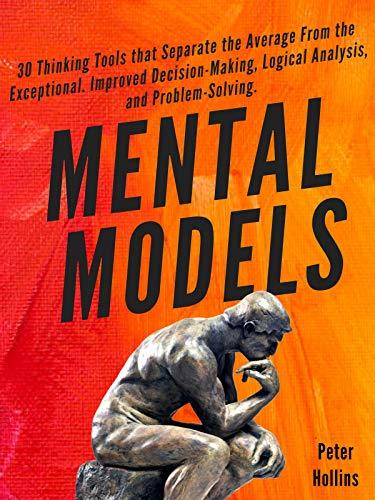
Mental Models: 30 Thinking Tools that Separate the Average From the Exceptional. Improved Decision-Making, Logical Analysis, and Problem-Solving.
by Peter Hollins
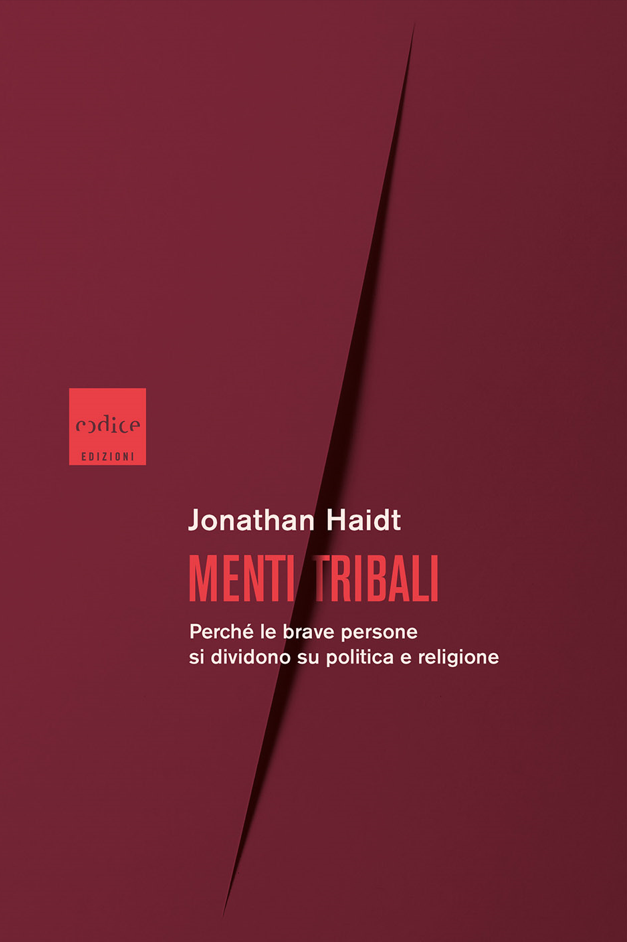
Menti tribali. Perché le brave persone di dividono su politica e religione
by Jonathan Haidt