Key Insights & Memorable Quotes
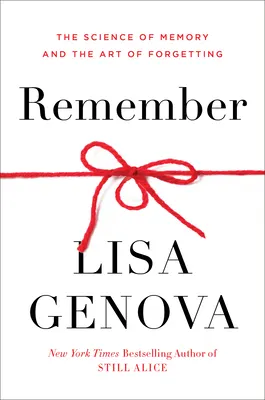
The most popular highlights from Remember: The Science of Memory and the Art of Forgetting, saved by readers on Screvi.
“Forgetting happens. If you stress about it, it'll happen even more.”
“Our brains don’t remember everything, but maybe what they remember is enough.”
“The parts of your brain that are now activated include the same neurons in your visual cortex that would be activated if you were actually looking”
“Diagnosis doesn't mean you are dying tomorrow. Keep living. You won't lose your emotional memory. You'll still be capable of understanding love and joy. You might not remember what I said 5 minutes ago or even who I am but you'll remember how I made you feel. You are more than what you can remember.”
“Surely there must be something we can do to combat aging’s normal but corrosive affects on memory performance. These declines in memory creation, retrieval, and processing speed aren’t all inevitable, are they? You’re not gonna like this, but appears the answer is ultimately yes. If you eat a daily diet of doughnuts, only go for a run if someone is chasing you, regularly sacrifice sleep by binge watching entire seasons of the latest show on Netflix until 3 AM, and are chronically stressed, you’ll most definitely accelerate the ageing of your memory.”
“People will often tell me that they have a terrible memory. Hearing that kind of attitude, I believe them. Older adults shown a list of negative words about aging, such as: decrepit, senile, handicapped, feeble. perform worse on memory and physical tests than do same-age subjects shown a list of positive words about aging, such as: wise, elder, vibrant, experienced. Like people, your memory will function better if it has high self-esteem. Speak nicely to and of your memory, and it will remember more and forget less.”
“Whatever you do over and over changes your brain, then your brain changes how you move your body. There’s”
“Our brains don't remember everything, but maybe what they remember is enough. And yet even when the meaningful is forgotten, memory doesn't define what it means to be human.”
“we often forget not because it’s efficient for our brains to do so but because we haven’t supplied our brains with the kinds of input needed to support memory creation and retrieval.”
“… fretting about forgetting can be a self-fulfilling prophecy. So, let’s all take a collective deep breath. The next time you struggle with the name of that famous surfer or forget to buy milk at the store, you can remember that these are examples of normal forgetting and, hopefully, you can relax. Forgetting happens. If you stress about it, it will happen even more.”
“You don't need memory to love or feel loved.”
“And if, despite all this, you are someday diagnosed with Alzheimer’s, there are three lessons I’ve learned from my grandmother and Greg and the dozens of other people I’ve come to know living with this disease: Diagnosis”
“Building an Alzheimer’s-resistant brain through cognitive stimulation means learning to play piano, meeting new friends, traveling to a new city, or reading this book. You’re welcome.”
“We frequently invent new information, often inaccurate, to fill in gaps in our memories so that the narrative feels more complete or pleasing.”
“working memory carries the beginning of the sentence you are reading now long enough for you to understand the entire sentence by the time you reach the end of it.”
“I couldn’t find my car, not because I had a horrible memory, amnesia, dementia, or Alzheimer’s. Temporarily losing my car had absolutely nothing to do with my memory. I couldn’t find my car, because I never paid attention to where I had parked it in the first place.”
“couldn’t find my car, because I never paid attention to where I had parked it in the first place. If we want to remember something, above all else, we need to notice what is going on. Noticing requires two”
“But we can't do anything about getting older. If we live long enough, is forgetting due to Alzheimer's our brain's destiny? For most of us, it is not. Alzheimer's is not a part of normal aging. Only 2% of people with Alzheimer's have the purely inherited early-onset form of the disease. 98% of the time, Alzheimer's is caused by a combination of the genes we inherited and how we live. While we can't do anything about our DNA, science clearly shows that the way we live can dramatically affect the accumulation of amyloid plaques. This in turn means that, like cancer and heart disease, there are things we can do to prevent Alzheimer's.”
“semantic memory, is memory for the knowledge you’ve learned, the facts you know about your life and the world—the Wikipedia of your brain.”
“Most of what we forget is not a failure of character, a symptom of disease, or even a reasonable cause for fear - places most of us tend to go when memory fails us. We feel worried, embarrassed, or plain scared every time we forget something we believe we should remember or would have remembered back when we were younger. We hold onto the assumption that memory will weaken with age, betray us, and eventually leave us.”
“doesn’t mean you’re dying tomorrow. Keep living. You won’t lose your emotional memory. You’ll still be capable of understanding love and joy. You might not remember what I said five minutes ago or even who I am, but you’ll remember how I made you feel. You are more than what you can remember.”
Find Another Book
Search by title or author to explore highlights from other books.
More Books You Might Like
Explore highlights from similar books.