Key Insights & Memorable Quotes
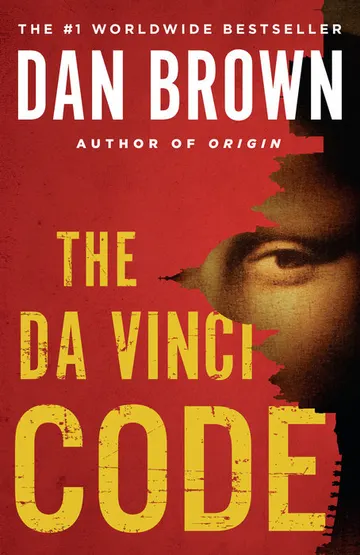
The most popular highlights from The da Vinci Code, saved by readers on Screvi.
“Men go to far greater lengths to avoid what they fear than to obtain what they desire.”
“History is always written by the winners. When two cultures clash, the loser is obliterated, and the winner writes the history books-books which glorify their own cause and disparage the conquered foe. As Napoleon once said, 'What is history, but a fable agreed upon?”
“These books can't possibly compete with centuries of established history, especially when that history is endorsed by the ultimate bestseller of all time." Faukman's eyes went wide. "Don't tell me Harry Potter is actually about the Holy Grail.""I was referring to the Bible."Faukman cringed. "I knew that.”
“Everyone loves a conspiracy.”
“Faith
“The Bible did not arrive by fax from heaven. The Bible is the product of man, my dear. Not of God. The Bible did not fall magically from the clouds. Man created it as a historical record of tumultuous times, and it has evolved through countless translations, additions, and revisions. History has never had a definitive version of the book.”
“By its very nature, history is always a one-sided account.”
“Telling someone about what a symbol means is like telling someone how music should make them feel.”
“What really matters is what you believe.”
“Life is filled with secrets. You can't learn them all at once.”
“When a question has no correct answer, there is only one honest response.The gray area between yes and no.Silence.”
“Every faith in the world is based on fabrication. That is the definition of faith
“Forgiveness is God's greatest gift”
“Can you keep secrets? Can you know a thing and never say it again?”
“Nothing in Christianity is original.”
“Learning the truth has become my life's love.”
“Today is today. But there are many tomorrows”
“Authors, he thought. Even the sane ones are nuts.”
“My lawyers will fricassee your testicles for breakfast. And if you dare board my plane without a warrant, your spleen will follow.”
“Those who truly understand their faiths understand the stories are metaphorical.”
“The Pentacle - The ancients envisioned their world in two halves - masculine and feminine. Their gods and goddesses worked to keep a balance of power. Yin and Yang. When male and female were balanced, there was harmony in the world. When they were unbalanced there was chaos.”
“At this gathering [Council of Niceau in 324 AD] many aspects of Christianity were debated and voted upon
“Coincidence was a concept he did not entirely trust. As someone who had spent his life exploring the hidden interconnectivity of disparate emblems and ideologies, Langdon viewed the world as a web of profoundly intertwined histories and events. The connections may be invisible, he often preached to his symbology classes at Harvard, but they are always there, buried just beneath the surface.”
“Her eyes were olive green
“The Last Supper is supposed to be thirteen men. Who is this woman?"Everyone misses it, our preconceived notions of this scene are so powerful that our mind blocks out the incongruity and overrides our eyes.”
“We fear what we do not understand...”
“Robert wondered if any of Harvard's revered Egyptologists had ever knocked on the door of a pyramid and expected an answer.”
Find Another Book
Search by title or author to explore highlights from other books.
More Books You Might Like
Explore highlights from similar books.