Key Insights & Memorable Quotes
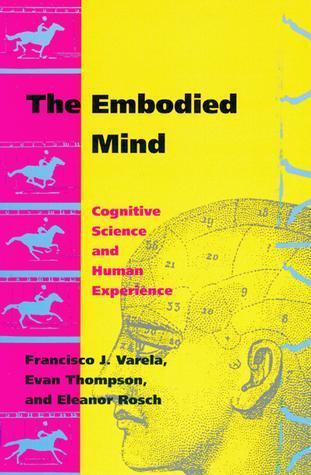
The most popular highlights from The Embodied Mind: Cognitive Science and Human Experience, saved by readers on Screvi.
Just as the mindfulness meditator is amazed to discover how mindless he is in daily life, so the first insights of the meditator who begins to question the self are normally not egolessness but the discovery of total egomania. Constantly one thinks, feels, and acts as though one had a self to protect and preserve. The slightest encroachment on the self's territory (a splinter in the finger, a noisy neighbor) arouses fear and anger. The slightest hope of self-enhancement (gain, praise, fame, pleasure) arouses greed and grasping. Any hint that a situation is irrelevant to the self (waiting for a bus, meditating) arouses boredom. Such impulses are instinctual, automatic, pervasive, and powerful. They are completely taken for granted in daily life.
... The result, in this world view, is that real freedom comes not from the decisions of an ego-self’s “will” but from action without any Selfwhatsoever
To deny the truth of our own experience in the scientific study of ourselves is not only unsatisfactory; it is to render the scientific study of ourselves without a subject matter. But to suppose that science cannot contribute to an understanding of our experience may be to abandon, within the modern context, the task of self-understanding. Experience and scientific understanding are like two legs without which we cannot walk. We can phrase this very same idea in positive terms: it is only by having a sense of common ground between cognitive science and human experience that our understanding of cognition can be more complete and reach a satisfying level. We thus propose a constructive task: to enlarge the horizon of cognitive science to include the broader panorama of human, lived experience in a disciplined, transformative analysis.
Así como el practicante de meditación se asombra de advertir cuán poco alerta está en su vida cuotidiana, lo primero que descubre cuando comienza a cuestionar el yo no es la carencia de ego sino su total egocentrismo. Constantemente pensamos, sentimos y actuamos como si tuviéramos un yo que proteger y preservar. La menor intrusión en el territorio del yo (la astilla en el dedo, el vecino bullicioso) despierta temor y furia. La menor esperanza de exaltación del yo (ganancia, elogio, fama, placer) despierta codicia y afán. Todo indicio de que una situción es irrelevante para el yo (aguardar un autobús, meditar) provoca aburrimiento. Tales impulsos son instintivos, automáticos, ubicuos y poderosos. En la vida cotidiana los damos por sentados. Los impulsos por cierto están allí y acontecen constantemente, ¿pero qué sentido tienen a los ojos del practicante inquisitivo? ¿Qué clase de yo respalda tales actitudes?
Find Another Book
Search by title or author to explore highlights from other books.
More Books You Might Like
Explore highlights from similar books.