Key Insights & Memorable Quotes
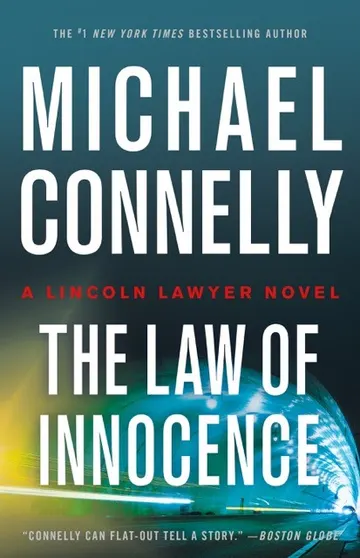
The most popular highlights from The Law of Innocence, saved by readers on Screvi.
“Innocence is not a legal term. No one is ever found innocent in a court of law.”
“In the law of innocence, for every man not guilty of a crime, there is a man out there who is. And to prove true innocence, the guilty man must be found and exposed to the world.”
“where there’s government subsidy, there is always corruption.”
“The law of innocence is unwritten. It will not be found in a leather-bound codebook. It will never be argued in a courtroom. It cannot be written into law by the elected. It is an abstract idea and yet it closely aligns with the hard laws of nature and science. In the law of physics, for every action, there is an equal and opposite reaction. In the law of innocence, for every man not guilty of a crime, there is a man out there who is. And to prove true innocence, the guilty man must be found and exposed to the world.”
“The only way to prove I didn’t do it is to prove who did,” I said. “That’s the law of innocence.”
“When it came to opening statements, I was from the Legal Siegel school of law. He always said, save your powder, meaning less is more; don’t reveal your case or its surprises until it’s time to present your evidence.”
“You know what they say: the FBI doesn’t share. It eats like an elephant and shits like a mouse.”
“That this person would continue to support the president after the media had documented his many, many untruths”
“Where the hell is Wuhan?” Bosch said. His words rescued me from the downward spiral of my thoughts. “Who?” I asked. He pointed to the radio. “Not who,” he said. “It’s a place somewhere in China. Were you listening?” “No, I was thinking,” I said. “What was it?” “They’ve got a mystery virus over there, killing people.” “Well, at least it’s there and not here.” “Yeah, for how long?”
“were allowed to play out until the bus got to its destination. Those who could walk off did and those who couldn’t were tended to. The bus pulled into the cavernous garage beneath the Clara Shortridge Foltz Criminal Justice Center and we were off-loaded and escorted into the building’s vertical maze of holding cells that served its twenty-four different courtrooms.”
“Nobody ever said the law is fair, Hay,” I told her. “Remember that.”
“Innocence is not a legal term. No one is ever found innocent in a court of law. No one is ever exonerated by the verdict of a jury. The justice system can only deliver a verdict of guilty or not guilty. Nothing else, nothing more.”
“was”
“breakfast the next morning Jennifer was the last to arrive. By then we had been around the table with team members”
“If 68 was a supporter of the president, it was likely she was a law-and-order hard-liner—not good for a guy accused of murder. That this person would continue to support the president after the media had documented his many, many untruths was a factor as well. It was blind loyalty to a cause, and an indicator that truthfulness was not an important part of her framework.”
“Somebody once said that a person’s favorite restaurant is where they know you. That might be true. They knew me at Dan Tana’s and I knew them: Christian at the door, Arturo at the table, Mike behind the bar. But that didn’t obscure the fact that the kitschy Italian joint with checkered tablecloths served up the best New York strip in the city. I liked the place because they knew me, but I liked the steak even better.”
“new”
“camera”
“Innocence is not a legal term.”
“That this person would continue to support the president after the media had documented his many, many untruths was a factor as well. It was blind loyalty to a cause, and an indicator that truthfulness was not an important part of her framework.”
“massive”
“Prosecutors could afford to be unimaginative, even stodgy. They trotted out their cases to the jury like furniture instructions from Ikea. Step-by-step with big illustrations, all the tools you needed included. No need to look elsewhere. No need to worry. And at the end you have a sturdy table that is both stylish and functional.”
Find Another Book
Search by title or author to explore highlights from other books.
More Books You Might Like
Explore highlights from similar books.