Key Insights & Memorable Quotes
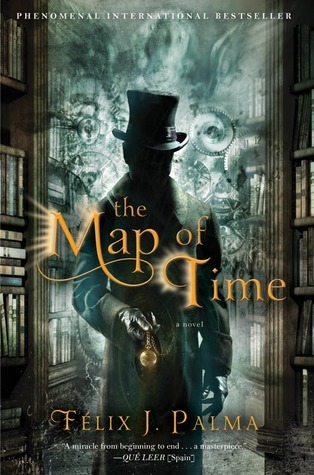
The most popular highlights from The Map of Time, saved by readers on Screvi.
(...) ¿qué era el tiempo si nadie podía medirlo, si nada podía acusar su paso? El tiempo solo se mostraba en las hojas secas, en las heridas que cicatrizaban, en la carcoma que devoraba, en el óxido que se extendía, y en los corazones que se cansaban. Si nadie estaba allí para señalarlo, el tiempo no era nada, absolutamente nada.
He had learned from experience that what he succeeded in putting down on paper was only ever a pale reflection of what he had imagined, and so he had come to accept that this would only be half as good as the original, half as acceptable as the flawless, unachievable novel that had acted as a guide, and which he imagined pulsating mockingly behind each book like some ghostly presence.
Striving to achieve a dream is never a waste of time.
We are the authors of our own fate-we write it each day with every one of our actions.
For the very first time Andrew realized that life, real life, had no connection with the way people spent their days, whose lips they kissed, what medals were pinned on them, or the shoes they mended. Life, real life went on soundlessly...ultimately there was no difference between Queen Victoria and the most wretched beggar in London: both were complex machines made up of bone, organ, and tissue, whose fuel was the breath of God.
Before cruelly vilifying them from a great height, the mudslingers at newspapers and journals should bear in mind that all artistic endeavors were by and large a mixture of effort and imagination, the embodiment of a solitary endeavor, of a sometimes long-nurtured dream, when they were not a desperate bid to give life meaning.
Time could only be seen in the falling leaves, a wound that healed, a woodworm's tunneling, rust that spread, and hearts that grew weary. Without anyone to discern it, time was nothing, nothing at all.
Merrick belonged to that class of reader who was able to forget with amazing ease the hand moving the characters behind the scenes of the novel.
(...) el tiempo nunca se pierde tratando de conseguir un sueño.
[A] writer’s most powerful weapon, his true strength, was his intuition, and regardless of whether he had any talent, if the critics combined to discredit an author’s nose for things, he would be reduced to a fearful creature who took a mistakenly guarded, absurdly cautious approach to his work, which would end up stifling his latent genius.
Sometimes the best way to find out what we want is to choose what we do not want.
If Wells recognized any merit in [Henry] James, it was his undeniable talent for using very long sentences in order to say nothing at all. p. 516
...the wrath of God pales beside that of man.
Time is a river sweeping away all that is born towards the darkest shore.
And now that Wells had heard him laugh, he wondered whether the so-called Elephant Man had not in fact been smiling at him from the moment he stepped into the room, a warm, friendly smile intended to sooth the discomfort his appearance produced in his guests, a smile no one would ever see. As he left the room, he felt a tear roll down his cheek.
Why had his mother gone to the trouble of bringing him into the world if the most exciting moment in his life was having been made lame by a bayonet?
¿Se han preguntado alguna vez qué es lo que convierte en responsables a los hombres? Yo se lo diré: que solo tienen una oportunidad de hacer cada cosa. Si existieran máquinas que nos permitieran corregir hasta nuestros errores más estúpidos viviríamos en un mundo lleno de irresponsables.
It is a question of will, Mr. Wells," he said, striving to imbue his slurred voice with a tone of authority. "That's all.
Ultimately it was man's limited senses which established the boundaries of the world.
Intelligence could not thrive where there was no change and no necessity for change.
There is little more I can add short of dissecting the man, or going into intimate details such as the modest proportions and slight southeasterly curvature of his manhood.
From then on, he was convinced that the universe dazzled mankind with volcanic eruptions, but had its own secret way of communicating with the select few, people like Andrew who looked at reality as though it were a strip of wallpaper covering up something else.
he was convinced that the universe dazzled mankind with volcanic eruptions, but had its own secret way of communicating with the select few, people like Andrew who looked at reality as though it were a strip of wallpaper covering up something else.
He had forgotten that his paradise was surrounded by hell itself.
Hinter jeder Erfindung steckt die Anstrengung eines Menschen, ein der Lösung eines Problems geweihtes Leben, um einen Mechanismus zu erfinden, der den Menschen überlebt und dann zu der Welt gehört, die ohne ihn weitergeht. Solange es Menschen gibt, die sich nicht damit begnügen, die Früchte der Bäume zu verzehren oder Trommeln zu schlagen, damit es regnet, die sich entschließen, ihre Intelligenz zu nutzen, um über die Rolle eines Parasiten im Garten Gottes hinauszuwachsen, so lange wird die Wissenschaft nicht sterben.
The answer was obvious: the passage of time, which transformed the volatile present into that finished, unalterable painting called the past, a canvas man always executed blindly, with erratic brushstrokes that only made sense when one stepped far enough away from it to be able to admire it as a whole.
...but there are stories that cannot begin at their beginning, and perhaps this is one of them.
...for what was time if there was no one to measure it, if there was nothing to experience its passing? Time cold only be seen in the falling leaves, a wound that healed, a woodworm's tunneling, rust that spread, and hearts that grew weary. Without anyone to discern it, time was nothing, nothing at all.
Mientras haya hombres que no se contenten con comer las frutas de los árboles o con aporrear tambores suplicando lluvia, y decidan usar su inteligencia para rebasar el papel de meros parásitos de la obra de Dios, la ciencia nunca sucumbirá.
Somehow this literary genre, which most people condemned, acted as a sort of counterbalance to Charles's soul; it was the ballast that prevented him from lurching into the serious or melancholy, unlike Andrew, who had been unable to adopt his cousin's casual attitude to life, and to whom everything seemed so achingly profound, imbed with that absurd solemnity that the transience of of existence conferred upon even the smallest act.
Find Another Book
Search by title or author to explore highlights from other books.
More Books You Might Like
Explore highlights from similar books.