Key Insights & Memorable Quotes
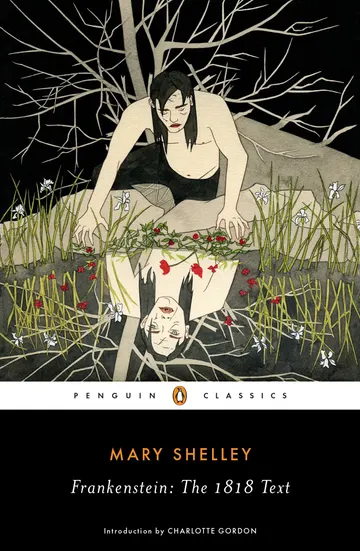
The most popular highlights from Frankenstein: The 1818 Text, saved by readers on Screvi.
“Nothing is so painful to the human mind as a great and sudden change.”
“Beware; for I am fearless, and therefore powerful.”
“Life, although it may only be an accumulation of anguish, is dear to me, and I will defend it.”
“I do know that for the sympathy of one living being, I would make peace with all. I have love in me the likes of which you can scarcely imagine and rage the likes of which you would not believe. If I cannot satisfy the one, I will indulge the other.”
“There is something at work in my soul, which I do not understand.”
“If I cannot inspire love, I will cause fear!”
“I ought to be thy Adam, but I am rather the fallen angel...”
“Even broken in spirit as he is, no one can feel more deeply than he does the beauties of nature. The starry sky, the sea, and every sight afforded by these wonderful regions, seems still to have the power of elevating his soul from earth. Such a man has a double existence: he may suffer misery, and be overwhelmed by disappointments; yet, when he has retired into himself, he will be like a celestial spirit that has a halo around him, within whose circle no grief or folly ventures.”
“There is love in me the likes of which you've never seen. There is rage in me the likes of which should never escape. If I am not satisfied int he one, I will indulge the other.”
“... the companions of our childhood always possess a certain power over our minds which hardly any later friend can obtain.”
“How mutable are our feelings, and how strange is that clinging love we have of life even in the excess of misery!”
“I have love in me the likes of which you can scarcely imagine and rage the likes of which you would not believe. If I cannot satisfy the one, I will indulge the other.”
“It is true, we shall be monsters, cut off from all the world; but on that account we shall be more attached to one another.”
“The world to me was a secret, which I desired to discover; to her it was a vacancy, which she sought to people with imaginations of her own.”
“The fallen angel becomes a malignant devil. Yet even that enemy of God and man had friends and associates in his desolation; I am alone.”
“I was benevolent and good; misery made me a fiend. Make me happy, and I shall again be virtuous.”
“Invention, it must be humbly admitted, does not consist in creating out of void, but out of chaos; the materials must, in the first place, be afforded: it can give form to dark, shapeless substances, but cannot bring into being the substance itself.”
“When falsehood can look so like the truth, who can assure themselves of certain happiness?”
“The whole series of my life appeared to me as a dream; I sometimes doubted if indeed it were all true, for it never presented itself to my mind with the force of reality.”
“Man," I cried, "how ignorant art thou in thy pride of wisdom!”
“Hateful day when I received life!' I exclaimed in agony. 'Accursed creator! Why did you form a monster so hideous that even you turned from me in disgust? God, in pity, made man beautiful and alluring, after his own image; but my form is a filthy type of yours, more horrid even from the very resemlance. Satan had his companions, fellow-devils, to admire and encourage him; but I am solitary and abhorred.' - Frankenstein”
“Listen to me, Frankenstein. You accuse me of murder; and yet you would, with a satisfied conscience, destroy your own creature. Oh, praise the eternal justice of man!”
“The world was to me a secret which I desired to devine.”
“With how many things are we on the brink of becoming acquainted, if cowardice or carelessness did not restrain our inquiries.”
“I am alone and miserable. Only someone as ugly as I am could love me.”
“Thus strangely are our souls constructed, and by slight ligaments are we bound to prosperity and ruin.”
“Learn from me, if not by my precepts, at least by my example, how dangerous is the acquirement of knowledge, and how much happier that man is who believes his native town to be his world, than he who aspires to become greater than his nature will allow.”
“I could not understand why men who knew all about good and evil could hate and kill each other.”
“Nothing is more painful to the human mind than, after the feelings have been worked up by a quick succession of events, the dead calmness of inaction and certainty which follows and deprives the soul both of hope and fear.”
“It may...be judged indecent in me to come forward on this occasion; but when I see a fellow-creature about to perish through the cowardice of her pretended friends, I wish to be allowed to speak, that I may say what I know of her character.”
Find Another Book
Search by title or author to explore highlights from other books.
More Books You Might Like
Explore highlights from similar books.