Key Insights & Memorable Quotes
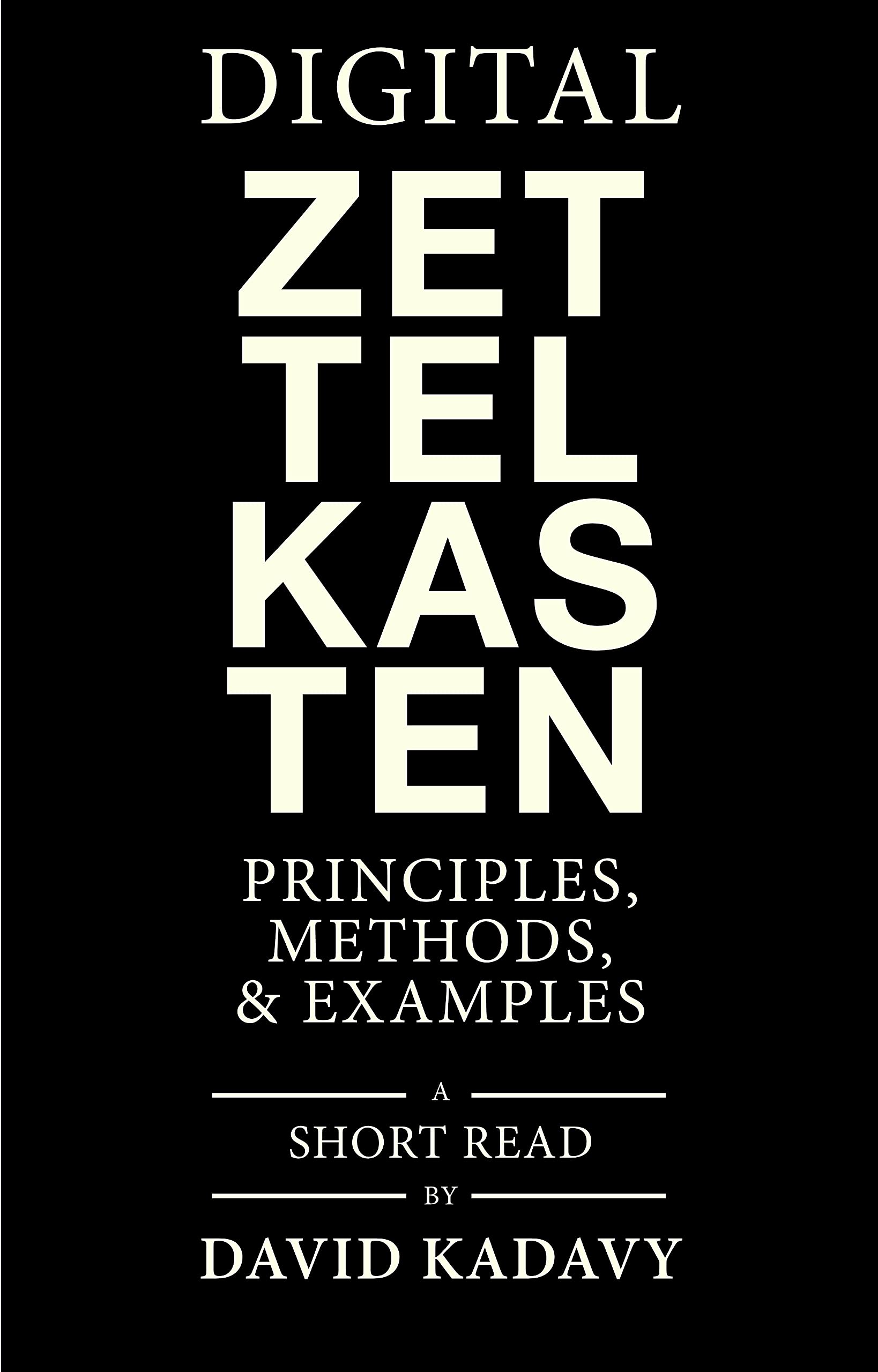
The most popular highlights from Digital Zettelkasten: Principles, Methods, & Examples, saved by readers on Screvi.
Permanent notes are the ultimate destination within your Zettelkasten for the best ideas you have or come across. In fact, your permanent notes are your Zettelkasten. The permanent note is the last stop for an idea before you synthesize it into something new.
If I have a thought I want to capture, I'll leave a note
The "someday/maybe" designation helps reduce worries that the idea might fall through the cracks, without obligating you to follow up on the idea right now.
Export the highlights When you're finished with the book, export the highlights.
Zettelkasten is German for "slip box"(Plural: Zettelkästen). In analog form, a zettel is literally a box filled with slips of paper witha note on it, as well as metadata used to organise those notes. The Zettelkasten method is a way of organising paper in a non hierarchal way. Instead of being restrictedb to keeping a note in only one place,or having to make multiple copies of the same note to put in various places,notes are organised so that you can arrive at one individual note through multiple routes, and that note can lead you to various other notes-much like today's internet, but in paper form.
Permanent Notes Permanent notes are explanations of a single idea, annotated with metadata about the subject of the note, other notes that note is related to, and the source of the note. You usually write permanent notes using literature notes as your source. You take only the most important ideas from your literature notes, and turn them into singular notes you can connect with other notes. Once you have many permanent notes, you can construct a rough draft for an entire article or book.
Look at the highlights of your highlights and re-write the interesting ones in your own words. You're now turning your fleeting notes into a literature note. It's okay not to summarize every highlight. Only worry about the information you most want to learn or that you can foresee wanting to use in the future.
What it is: You can mix phrases, unique IDs, and Folgezettel to come up with your own file-naming conventions – and/or add whatever other data you think is useful to your filenames. For example, you might start each filename with a Folgezettel code, add a useful phrase, and use a keyword or a unique character to help with other properties. For example, the note about Narcissus could be named “1a1a - Narcissus stared at his reflection - Example.” You’d have the Folgezettel code you created, a useful phrase, and the “Example” keyword could help you find various categories of notes. You could have in your filenames other categories such as Quotes, Facts, and Stories, which would help you find the right category of information to fill in the gaps as you write. Pros: The best part of mixing your own file-naming convention from a variety of techniques is you can customize it to your workflow. Cons: The worst part of mixing your own file-naming convention from a variety of techniques is there’s no end to how much time and energy you could waste tweaking it.
Keep the quotes that hit you. Save them to Screvi with this book's top highlights.
Save freeIt's okay not to summarize every highlight. Only worry about the information you most want to learn or that you can foresee wanting to use in the future. Let's look again at the part of Ahrens' passage which I highlighted: Experienced academic readers usually read a text with questions in mind and try to relate it to other possible approaches, while inexperienced readers tend to adopt the question of a text and the frames of the argument and take it as a given.
Permanent Notes Permanent notes are explanations of a single idea, annotated with metadata about the subject of the note, other notes that note is related to, and the source of the note.
I use my tag index as a starting point. I rearrange the index according to how an article might flow, then I re-write from scratch in a separate document. In this way, I’ve eliminated any chance of writer’s block, as I can mostly copy what I’ve already written. But in the process of re-writing, I always find a more crisp way of stating my point, and I often get additional ideas that aren’t in my notes.
Once you've exported your highlights, review them and highlight, once again, the parts of those highlights that are the most interesting. This is a mental energy management technique: When you were reading the book, you were more focused on reading it, not on thinking deeply about whether or not a passage was useful. Now as a separate task you're asking yourself which parts are interesting enough that you want to re-write them in your own words later.
Zettelkasten frees your mental energy from having to remember and retrieve things you read or wrote long ago, you have more mental energy available to think about new ideas. The act of organizing your notes is just enough a challenge to spark new ideas without burning yourself out.
Unlike a card-catalog in an old library, the purpose of a Zettelkasten is not to find an individual note, but rather to explore the connections amongst notes. This can help you collect knowledge to write papers and books quickly, and find areas you may need to research further. Additionally, the act of organizing a Zettelkasten often leads to unexpected insights that spring from the process of linking notes to one another, or assigning keywords to a note.
Raw is for storing the "raw," exported highlights from books or articles.
When you take the extra time to re-write, only the clearest and most compelling elements survive – not to mention that you further internalize the knowledge.
Keep the quotes that hit you. Save them to Screvi with this book's top highlights.
Save freeProcessing the contents of the inbox will be a regular ritual in managing your Zettelkasten.
In a digital Zettelkasten, you can easily review all notes associated with a tag – either with a quick search, or through the interface of any tags-compatible text editor. But a tag index gives you even more context to the notes that cover a topic.
I suggest three other folders: Inbox Someday/Maybe Raw
The Zettelkasten method helps break reading down into a series of engaging rituals that repeatedly expose you to the most interesting things you've read – thus helping you retain what you read.
Turning your notes into completed work The point of a Zettelkasten is to turn your notes into completed writing. The act of note-taking helps solidify knowledge in your mind, while developing miniature rough drafts you can turn into completed writing.
Do they wonder where to store a note or how to retrieve it? The archivist asks: Which keyword is the most fitting? A writer asks: In which circumstances will I want to stumble upon this note, even if I forget about it? It is a crucial difference.
Break literature notes into permanent notes Now take only the most interesting ideas from the literature notes, and turn each into individual permanent notes. Permanent notes should have one idea per note.
When you were reading the book, you were more focused on reading it, not on thinking deeply about whether or not a passage was useful.
Keep the quotes that hit you. Save them to Screvi with this book's top highlights.
Save freeThe metadata you include in your notes helps narrow your searches in the future, and/or speed up your writing process when you create completed work.
But your Zettelkasten doesn't just help jog your memory. The activities involved in managing it also help solidify your memory, so it needs less jogging in the first place. Your Zettelkasten also lets you store incomplete thoughts and connections.
The purpose of a fleeting note is to say, "here's something interesting I might want to remember or refer to some day." You need to record just enough information to later decide whether you want to turn your fleeting note into a literature note, permanent note, or someday/maybe.
If writing a passage makes me think of something related, I write it in parentheses.
The Zettelkasten method is a way of organizing paper in a non-hierarchical way.
Inbox is where I put fleeting notes that need to be processed.
Find Another Book
Search by title or author to explore highlights from other books.
More Books You Might Like
Explore highlights from similar books.