Key Insights & Memorable Quotes
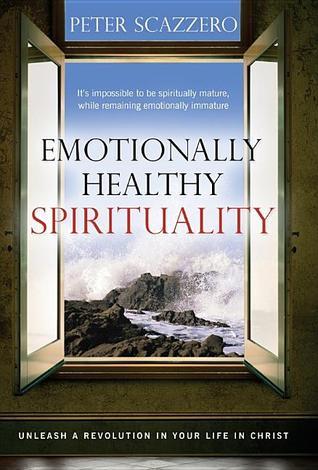
The most popular highlights from Emotionally Healthy Spirituality: Unleash A Revolution In Your Life in Christ, saved by readers on Screvi.
Ignoring our emotions is turning our back on reality. Listening to our emotions ushers us into reality. And reality is where we meet God. . . . Emotions are the language of the soul. They are the cry that gives the heart a voice. . .
When we deny our pain, losses, and feelings year after year, we become less and less human. We transform slowly into empty shells with smiley faces painted on them. Sad to say, that is the fruit of much of our discipleship in our churches. But when I began to allow myself to feel a wider range of emotions, including sadness, depression, fear, and anger, a revolution in my spirituality was unleashed. I soon realized that a failure to appreciate the biblical place of feelings within our larger Christian lives has done extensive damage, keeping free people in Christ in slavery.
emotional health and spiritual maturity are inseparable. It is not possible to be spiritually mature while remaining emotionally immature.
As Parker Palmer said, “Self-care is never a selfish act—it is simply good stewardship of the only gift I have, the gift I was put on earth to offer others. Anytime we can listen to true self and give it the care it requires, we do it not only for ourselves, but for the many others whose lives we touch.
Jesus was not SELFLESS. He did not live as if ONLY other people counted. He knew his value and worth. He had friends. He asked people to help him. At the same time Jesus was not SELFISH. He did not live as if nobody counted. He gave his life out of love for others. From a place of loving union with his Father, Jesus had a mature, healthy 'true self.
When genuine love is released in a relationship, God’s presence is manifest.
Every time I make an assumption about someone who has hurt or disappointed me without confirming it, I believe a lie about this person in my head. This assumption is a misrepresentation of reality. Because I have not checked it out with the other person, it is very possible I am believing something untrue. It is also likely I will pass that false assumption around to others.
Life can be difficult, so have fun whenever you can to the glory of God.
Keep the quotes that hit you. Save them to Screvi with this book's top highlights.
Save freeLoving well is the goal of the Christian life.
By failing to let others be themselves before God and move at their own pace, we inevitably project onto them our own discomfort with their choice to live life differently than we do.
True spirituality frees us to live joyfully in the present.
Our relationship with God and relationship with others are two sides of the same coin.
You can’t have the true peace of Christ’s kingdom with lies and pretense.
Respect is not a feeling. It is how we treat another person.
The Bible does not spin the flaws and weaknesses of its heroes. Moses was a murderer. Hosea’s wife was a prostitute. Peter rebuked God! Noah got drunk. Jonah was a racist. Jacob was a liar. John Mark deserted Paul. Elijah burned out. Jeremiah was depressed and suicidal. Thomas doubted. Moses had a temper. Timothy had ulcers. And all these people send the same message: that every human being on earth, regardless of their gifts and strengths, is weak, vulnerable, and dependent on God and others.
Solitude is the practice of being absent from people and things to attend to God.
Keep the quotes that hit you. Save them to Screvi with this book's top highlights.
Save freeChristian spirituality, without an integration of emotional health, can be deadly—to yourself, your relationship with God, and the people around you.
The vast majority of us go to our graves without knowing who we are.
Be willing to tolerate the discomfort necessary for growth.
The critical issue on the journey with God is not “Am I happy?” but “Am I free?
God never loses any part of our past for his future when we surrender ourselves to him. Every mistake, sin, and detour we take in the journey of life is taken by God and becomes his gift for a future of blessing.
Changing the way we have lived for twenty or forty or sixty years is nothing short of a revolution. 4.
Can we really love our neighbors well without loving ourselves?
Lord, help me to be still before you. Lead me to a greater vision of who you are, and in so doing, may I see myself—the good, the bad, and the ugly. Grant me the courage to follow you, to be faithful to become the unique person you have created me to be. I ask you for the Holy Spirit’s power to not copy another person’s life or journey. “God, submerge me in the darkness of your love, that the consciousness of my false, everyday self falls away from [me] like a soiled garment. . . . May my ‘deep self’ fall into your presence. . . . knowing you alone . . . carried away into eternity like a dead leaf in the November wind.”24 In Jesus’ name, amen.
Keep the quotes that hit you. Save them to Screvi with this book's top highlights.
Save freeBILL OF RIGHTS Respect means I give myself and others the right to: Space and privacy (e.g., knocking on doors before entering, not opening one another’s mail, respecting each other’s needs for quiet and space); Be different (e.g., allowing preferences for food, movies, volume of music, and how we spend our time); Disagree (e.g., making room for each person to think and see life differently); Be heard (e.g., listening to each other’s desires, opinions, thoughts, feelings, etc.); Be taken seriously (e.g., listening and being present to one another); Be given the benefit of the doubt (e.g., checking out assumptions rather than judging one another when misunderstandings arise); Be told the truth (e.g., counting on the truth when asking each other for information—from “Did you study for the test that you failed?” to “Why were you late coming home?”); Be consulted (e.g., checking and asking when decisions will affect others); Be imperfect and make mistakes (e.g., leaving “room” for breaking things, forgetting things, letting each other down unintentionally, failing tests when we have studied, etc.); Courteous and honorable treatment (e.g., using words that don’t hurt, asking before using, consulting when appropriate, treating each other as I-Thou’s); and Be respected (e.g., taking one another’s feelings into account)
We imitate God by stopping our work and resting.
Regardless of how we might feel about another human being, they are made in God’s image and of infinite value and worth.
When, out of fear, we avoid conflict and appease people, we are false peacemakers. For
According to Gallup polls and sociologists, one of the greatest scandals of our day is that “evangelical Christians are as likely to embrace lifestyles every bit as hedonistic, materialistic, self-centered and sexually immoral as the world in general.”3 The statistics are devastating: Church members divorce their spouses as often as their secular neighbors. Church members beat their wives as often as their neighbors. Church members’ giving patterns indicate they are almost as materialistic as non-Christians. White evangelicals are the most likely people to object to neighbors of another race. Of the “higher-commitment” evangelicals, a rapidly growing number of young people think cohabitation is acceptable prior to marriage.4 Ron Sider, in his book The Scandal of the Evangelical Conscience, summarizes the level of our compartmentalization: “Whether the issue is marriage and sexuality or money and care for the poor, evangelicals today are living scandalously unbiblical lives. . . . The data suggest that in many crucial areas evangelicals are not living any differently from their unbelieving neighbors.”5 But you don’t need a lot of statistics to know how true this is. Just ask Angela, a new member of our congregation whose question to me also explained why she had dropped out of church for five years: “Why is it that so many Christians make such lousy human beings?
Christianity is not about our disciplined pursuit of God, but about God’s relentless pursuit of us—to
Find Another Book
Search by title or author to explore highlights from other books.
More Books You Might Like
Explore highlights from similar books.


