Key Insights & Memorable Quotes
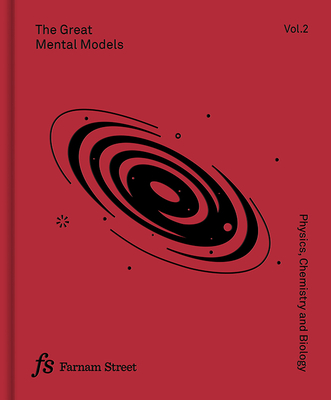
The most popular highlights from The Great Mental Models Volume 2: Physics, Chemistry and Biology, saved by readers on Screvi.
The stronger we are relative to others, the less willing we generally are to change. We see strength as an immediate advantage that we don’t want to compromise. However, it’s not strength that survives, but adaptability. Strength becomes rigidity.
Perspective often comes from distance or time. If you’re trying to solve a problem and you’re stuck, try shifting your vantage point. Examples of this are moving up and contemplating the bigger picture, moving down and seeing more details, or assuming the perspective of other stakeholders—customers, suppliers, partners, government. Many problems become clearer if you extend the timeline. What does this situation look like in the weeks, months, and years ahead? Assuming different perspectives allows you to gain a more complete understanding of what’s really going on.
Energy is precious and we employ it sparingly. It’s human nature to allow the current state to remain as changing it requires us to expend energy.
Too often we get stuck in “functional fixedness,” a mindset where we see in things only their intended use, rather than their potential use.
Stories are an attempt to tame the terrifying randomness that surrounds us. As we go through life, we are constantly absorbing chaotic information that we make sense of through narratives.
When you see someone doing something that doesn’t make sense to you, ask yourself what the world would have to look like to you for those actions to make sense.
The leverage you have may not always be the leverage you want, but chances are, if you look, you will find you have some somewhere.
borders tend to be places of exchange
This model teaches us that it’s much more important to pay attention to where you are going and not how fast you are moving
The word selection can be confusing, because its common usage implies choice: I’m selecting this over that. In reality, the concept means that the more favorable a trait is for a particular environment, the higher the chance of that organism living long enough to procreate. Biologist Geerat J. Vermeij describes it as “nonrandom elimination.
Ownership and control are different things.
If a man does not know to what port he is steering, no wind is favorable to him.
Yorke writes that “every act of perception is an attempt to impose order, to make sense of a chaotic universe. Storytelling, at one level, is a manifestation of this process.
Tsze-Kung asked, “Is there one word with which to act in accordance throughout a lifetime?” The Master said, “Is not reciprocity such a word? What you do not want done to yourself, do not do to others.” » Confucius
The physical world, all of it, only ever has one destination: equilibrium. » Helen Czerski2
Thus, our progress in a given area is not about how fast we are moving now but is best measured by how far we’ve moved relative to where we started.
Hadrian’s Wall thus was just one part of the overall strategy to maintain contrast between Roman territory and the tribes of the north.
Find Another Book
Search by title or author to explore highlights from other books.
More Books You Might Like
Explore highlights from similar books.