Key Insights & Memorable Quotes
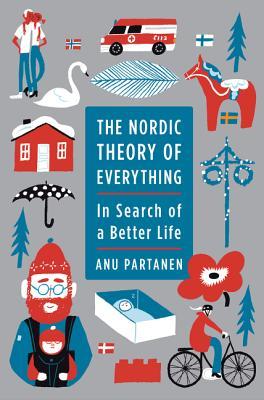
The most popular highlights from The Nordic Theory of Everything: In Search of a Better Life, saved by readers on Screvi.
It was all part of a way of doing things in the United States that, as I would gradually realize, forced you to be constantly on guard, constantly worried that whatever amount of money you had or earned would never be enough, and constantly anxious about navigating the complex and mysterious fine print thrown at you from every direction by corporations that had somehow managed to evade even the bare minimum of sensible protections for consumers.
And people should be able to make choices related to their employment without worrying whether they will still be able to receive, say, treatment for cancer.
Massachusetts senator Elizabeth Warren put it eloquently: “There is nobody in this country who got rich on his own. Nobody. You built a factory out there, good for you. But, I want to be clear: you moved your goods to market on the roads the rest of us paid for. You hired workers the rest of us paid to educate. You were safe in your factory because of police forces and fire forces that the rest of us paid for. You didn’t have to worry that marauding bands would come and seize everything at your factory and hire someone to protect against this because of the work the rest of us did. Now look, you built a factory and it turned into something terrific or a great idea. God bless. Keep a big hunk of it. But part of the underlying social contract is you take a hunk of that and pay forward for the next kid who comes along.
Education became Finland’s best hope for preparing its population for a new economy based not on agriculture or manufacturing, but on knowledge.
A family will not function well as a team unless it is first composed of strong, self-sufficient individuals.
Americans often view maternity leave as a time for a mother to recover from giving birth, and anything longer as an entitlement that unfairly gives women benefits that men and their childless colleagues don’t get. Nordic societies see this question differently. For starters, in the Nordic view long leaves for both parents are seen as crucial to allow the child to form strong bonds with both the mother and the father.
In most other modern industrialized societies, including Finland, health care is considered a basic human right.
Henrik Berggren—put together their observations on individualism and formulated something they called “the Swedish theory of love.” The core idea is that authentic love and friendship are possible only between individuals who are independent and equal.
It’s an unfortunate fact that the United States remains astonishingly backward compared to almost all other advanced Western countries when it comes to education, because in America, what predicts how well a child will do in school is not a child’s aptitude or hard work, but the status of the child’s parents—which is to say, their own levels of education and wealth.
According to a UN report from 2014 surveying 185 countries and territories, only two did not guarantee any paid maternity leave; Papua New Guinea and the United States. The United States is also one of only a handful of countries that don’t guarantee their workers any paid time off for illness—others include Angola, India, and Liberia.
Mothers in America seemed capable of miracles—returning to work just a few weeks after giving birth, pumping milk between meetings, and working at home on the weekends by managing children with one hand and their BlackBerrys with the other. I was certain I could never function at that level.
The law on basic education in Finland specifically states that after school and homework, students should still be allowed time for hobbies and rest.
As I’d worked at my job and traveled and read and lived my life, I’d also decided that a woman is meant to be more than a caretaker for her man and children. She ought to have her own purpose, her own will, her own career,
Your business has to be in good-enough shape that it’s not going to crumble just because someone is taking care of their children. If your business can’t handle that, then you have a problem with either your business model or your management.
Yes, Finland and the United States are different. But consider the fact that most American education is managed by the states. Finland’s population of 5.5 million is easily comparable to many an American state. In fact, more than half of America’s states—thirty of them—have populations smaller than Finland’s. Solely on the question of size, there’s no reason any number of states in the United States couldn’t implement a system just like Finland’s.
Other international organizations—the Organization for Economic Co-operation and Development (OECD), the European Union (EU), the World Economic Forum—now encourage their member nations to guarantee their workers paid parental leaves and subsidized day care. They do so because it’s clear that these things are good for economic growth. Studies demonstrate the ways that family-friendly policies tailored to today’s realities benefit a country’s economy. Family leave policies and affordable day care increase women’s participation in the labor force, help employers retain workers, and improve the health of women and children.
Gradually it dawned on me how much people in America depended on their employers for all sorts of things that were unimaginable to me: medical care, health savings accounts, and pension contributions, to name the most obvious. The result was that employers ended up having far more power in the relationship than the employee. In America jeopardizing your relationship with your employer carried personal risks that extend far beyond the workplace, to a degree unthinkable where I came from.
As a Nordic immigrant to the United States, I noticed something else, too. Americans, and many others around the world, did not seem fully aware of how much better things could be.
you have the money in the United States, you absolutely can get world-class care. But here’s the thing that somehow escapes American awareness in this discussion: Everyone else in all the other wealthy industrialized countries—absolutely including all the ones that have universal national health-care systems—
American policy makers have realized. Ultimately, if the goal is to educate a nation’s people, nothing is more important than equity of opportunity, and if the goal is to produce creative, confident, flexible, independent thinkers, nothing is more important than nurturing the autonomy of the individual.
Nordic nations have realized that it is in the best long-term interests of everyone, including businesses, to support families in raising children. After all, in the long run, happy family members are more productive, and businesses will have a wider pool of healthy, productive, well-adjusted workers to draw on in the future. So when it comes to granting parental leave after a baby is born, the Nordic approach is also quite different from the American.
So I admit I was surprised by how much parenting in America is still the woman’s responsibility. In most cases it is the woman who has battled her employers for parental leave, researched day-care options, and arranged work around her children’s schedules. She takes them to the doctor, she prepares school lunches, she stays home from work when they’re sick. American mothers spend about twice as much time caring for their children as do fathers, and when it comes to housework in general, American women spend about triple the amount of time on it that men do. American women spend far more time than men doing such unpaid work
She concluded that while people themselves might think they’re irreplaceable, in reality nobody is.
Like not a few other Americans, I imagine, I found myself in the evenings nursing a bowl of ice cream in front of the British TV sensation Downton Abbey, fantasizing that I had married a wealthy aristocrat who commanded a vast estate,
For the citizens of the Nordic countries, the most important values in life are individual self-sufficiency and independence in relation to other members of the community.
The trouble is, many Americans have come to believe there is no middle ground—no role for government services that might be “smart” rather than “big.” Government, in whatever form, has come to be seen as the enemy. In one recent poll a third of Americans even believed that an armed rebellion might be necessary to protect their liberties from government intrusion in the near future.
Rather the goal has been to free the individual from all forms of dependency within the family and in civil society: the poor from charity, wives from husbands, adult children from parents, and elderly parents from their children. The express purpose of this freedom is to allow all those human relationships to be unencumbered by ulterior motives and needs, and thus to be entirely free, completely authentic, and driven purely by love.
Brooks paints a picture of an America that allows “the ambitious and the gifted to surf through amazing possibilities,” but where the people who lack these skills fall further behind.
American society, despite all its high-tech innovation and mobility, just doesn’t provide the basic support structures for families—support structures that all Nordic countries provide absolutely as a matter of course to everyone, as does nearly every other modern wealthy country on the planet.
They can study whatever they want, and they don’t have to risk their financial future to do so.
Find Another Book
Search by title or author to explore highlights from other books.
More Books You Might Like
Explore highlights from similar books.