Key Insights & Memorable Quotes
The most popular highlights from You Are Not Your Own: Belonging to God in an Inhuman World, saved by readers on Screvi.
We are not free to pursue whatever brings us the most personal fulfillment. We are not free to define our identity in any way we wish. We are not free to use people or creation as tools for our own ends. We are limited
This is the fundamental lie of modernity: that we are our own.
If everyone in America suddenly acknowledged that they are not their own but belong to God, we would still be left with systems, institutions, practices, and tools that are designed for the sovereign self, and it wouldn’t take long before we found ourselves right back where we started. We cannot evangelize our way out of this problem. We cannot volunteer our way out. We need a miracle. Our desire for a program of self-improvement, a personal method of accepting that you are not your own, is itself a symptom of the problem. We believe we can use technique to solve the problems of a society governed by technique—but as we’ve discovered, that does not work.
When other forms of law oppress us, we quite naturally retreat into autonomy, or self-law.
Everyone is on their own private journey of self-discovery and self-expression, so that at times, modern life feels like billions of people in the same room shouting their own name so that everyone else knows they exist and who they are—which is a fairly accurate description of social media.
Belonging to God sets limits on our lives. Sometimes they are hard limits to bear. It is not easy to stand before God, even with grace. Moment by moment we must set aside our sinful desires, even the ones closest to our heart, to live sacrificially. I do not want to lie to you. This is a difficult life.
No matter how much we consciously affirm that our existence is already justified through God, virtually every other voice we interact with will tell us, “No. Keep striving. You haven’t done enough. If you quit now, your life will be a waste. Do something else to make it worthwhile.
While belonging to the church, you will be hurt. You will have to learn to love people who look different from you, who have different interests, passions, and languages. You’ll have to give sacrificially to support people who in a strict meritocracy don’t “deserve” your compassion or aid. You’ll have to submit to the right leadership of elders. You’ll have to get over yourself and get out of your head. Maybe hardest of all, you’ll have to do all this while rejecting the lie that it is your love and service that makes you righteous or important or justified. You are righteous because Christ is righteous. You love and serve because He loved and served you.
When you choose to follow God’s laws out of personal preference, you will eventually discover a breaking point where your desire for experiences or self-expression comes up hard against an ethical law. And at that moment, you can choose to abandon Christianity as an inadequate or antiquated lifestyle, find a more inclusive style of Christianity, or you can accept that Christianity was never meant to be a lifestyle and with the aid of the Holy Spirit deny your desire. Only if you truly belong to someone else does the latter option make any sense. If you belong to yourself, then it is foolish and perhaps even abusive to deny yourself. But if “you are not your own,” it matters what you do with your body.
As Kierkegaard understood, the deepest despair occurs when we are unconscious of being in despair. When we accept how deeply dysfunctional our world is, contentment isn’t really an option for us.
Like the rest of western society, the church in the West tends to be good at helping people cope with modern life, but not at undoing the disorder of modern life.
For Dante in the fourteenth century, the question was not “Who am I?” but “Who is God?” and “How can I grow in Christlikeness?
The best example of this is Dante’s The Divine Comedy, which famously begins: “Midway on our life’s journey, I found myself / In dark woods, the right road lost.”17 One reason these lines have resonated with readers for centuries is that the poet is describing a common human experience: waking up halfway into life only to discover you are lost. Perhaps you wake up one morning questioning whether your life is worth living.
Our egotistical temptation is to think that what matters in life is what is big and visible and political. So we make grand plans and join national movements in hopes that we can make a “real” difference. And no doubt, some political movements can make a real difference. But for the most part the answer to the city is found in millions of tiny decisions to live faithfully even while living in the city.
Humans cannot live without meaning. We must interpret our world to navigate it. The only question is where that meaning comes from.
If abortions increase and racial justice remains elusive and wars develop in new and even more dehumanizing forms, we don’t get to stop doing good. We have received orders from God to “do justice, and to love kindness, and to walk humbly with your God” (Micah 6:8).
Christ truly knows us and His acceptance unites us to Him, sanctifying us by teaching us moment by moment to love what is true and good and beautiful—to love His will.
Instrumentalizing human persons is one of the defining features of our contemporary anthropology. When we are all our own, we have no obligation to think of each other as anything more than tools for our personal gain. But in the counter anthropology I am recommending—the idea that we are not our own—we seem to find the same instrumentalization at work. Perhaps the counter anthropology is inhuman too? Not quite. Rather we should say that all abusive forms of authority treat people as less-than-fully-human and do not desire their good.
Instead of desiring and pursuing our own good, we are obligated to desire and pursue the good of others (Galatians 6:10; Philippians 2:3
You cannot desire the good of your non-Christian neighbor too much. It is not possible. However much you desire for your non-Christian neighbors to receive justice and know God’s love and mercy and to be treated rightly as human persons made in God’s image, you could always desire their good more. In contemporary America, our temptation is to care too little, not too much. Our tendency is to think of ourselves as totally independent of our street, neighborhood, and city. But we have an obligation to them.
Almost everyone else you meet will continue to believe that they are their own and so are you. Almost every institution will treat you like an autonomous individual, subject to instrumentalization and valued according to efficiency.
If I had to guess, I’d say that Americans in the evangelical church are not much better at accepting their lives as a gift from God than their secular neighbors. I witness much of the same ambition, the same fight for validation, the same fear of inadequacy driving people in the church and outside the church—in my own heart.
But so long as our foundational understanding of what it means to be a human goes unquestioned, so long as we blame our problems on natural or biological limitations, societal injustices, or personal weaknesses, our only recourse will be more techniques. Thank God we are not our own.
The faithful Christian life looks like thousands of little deaths to self every day.
The reports about these contracted moderation companies are grim. In one investigation, The Verge found that employees at a Facebook moderation office in Phoenix, Arizona, were developing drug habits to cope.22 They turned to dark humor. They suffered panic attacks. They had sex with each other as a form of “trauma bonding.” All the while, social media companies keep these employees at arm’s length by hiring them as contractors, not full-time employees. I have no doubt that social media companies will try new techniques to address these problems. At some point there will probably be artificial intelligence sophisticated enough to accurately moderate images and eliminate the need for constant human exposure to filth. But given the track record of techniques, I suspect such AI will also introduce new, unanticipated problems. In any event, the human capacity for imaginative evil will always be one step ahead of AI.
Part of our unease with the phrase stems from being raised in a culture that treats autonomy as sacred. We idolize rebels, free thinkers, and mavericks. Our modern myths are stories of rejecting traditional expectations to discover your true, pure identity. As we have seen, in the contemporary anthropology, to be fully human is to be autonomous.
So obvious are the impotence and distress of all men in face of the social machine, which has become a machine for breaking hearts and crushing spirits, a machine for manufacturing irresponsibility, stupidity, corruption, slackness, and, above all, dizziness. The reason for this painful state of affairs is perfectly clear. We are living in a world in which nothing is made to man’s measure; there exists a monstrous discrepancy between man’s body, man’s mind and the things which at the present time constitute the elements of human existence; everything is disequilibrium. SIMONE WEIL, OPPRESSION AND LIBERTY
Our faith in merit is spiritually and morally harmful for parents and children, teachers and students, winners and losers, individuals and communities. And it is based on the belief that we are our own.
Once I am liberated from all social, moral, natural, and religious values, I become responsible for the meaning of my own life. With no God to judge or justify me, I have to be my own judge and redeemer. This burden manifests as a desperate need to justify our lives through identity crafting and expression
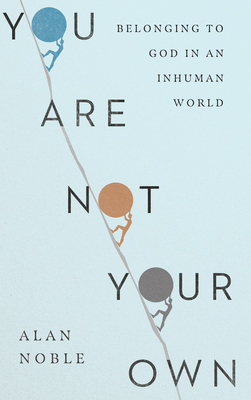
Sometimes you will hear people try to make this obsession with means into a virtue: “It’s not about where you’re going, it’s how you get there.” But if you dwell on these claims long enough, the best you can do is say with Albert Camus, “The struggle itself toward the heights is enough to fill a man’s heart. One must imagine Sisyphus happy.”8 In his famous essay, The Myth of Sisyphus, Camus suggests that human life is much like the fate of Sisyphus from Greek mythology, who was damned to spend eternity pushing a boulder up a mountain, only to watch it roll down again. Life, then, is an endless, arduous, meaningless existence. Also, to be clear, Sisyphus is in Hades. If all society can promise us is a life in Hades pushing the boulder of the Responsibilities of Self-Belonging, then it’s not much of a promise.
Find Another Book
Search by title or author to explore highlights from other books.
More Books You Might Like
Explore highlights from similar books.