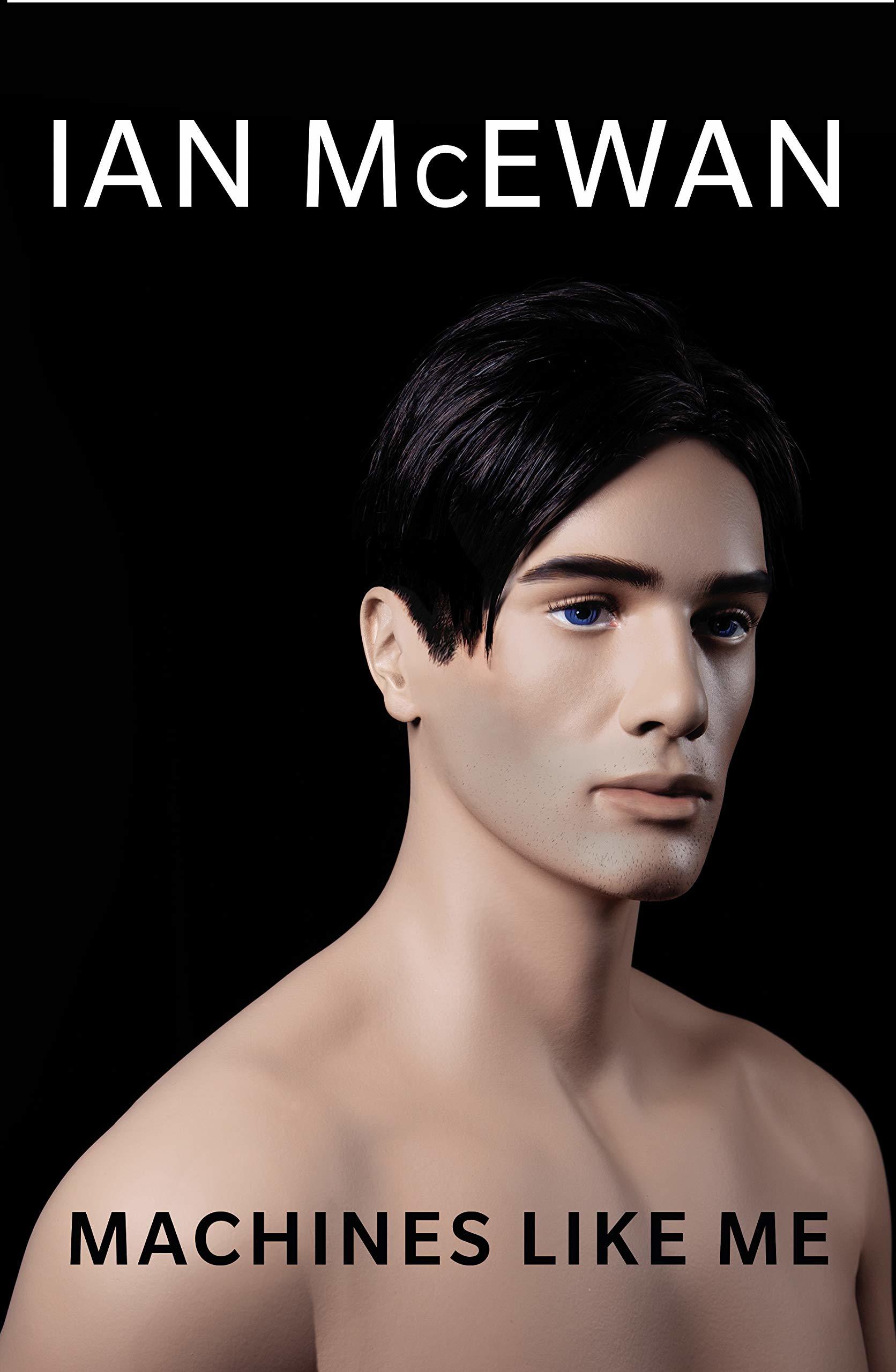
Key Insights & Memorable Quotes
The most popular highlights from Machines like Me, saved by readers on Screvi.
As Schopenhauer said about free will, you can choose whatever you desire, but you’re not free to choose your desires.
We create a machine with intelligence and self-awareness and push it out into our imperfect world. Devised along generally rational lines, well disposed to others, such a mind soon finds itself in a hurricane of contradictions. We’ve lived with them and the list wearies us. Millions dying of diseases we know how to cure. Millions living in poverty when there’s enough to go around. We degrade the biosphere when we know it’s our only home. We threaten each other with nuclear weapons when we know where it could lead. We love living things but we permit a mass extinction of species. And all the rest – genocide, torture, enslavement, domestic murder, child abuse, school shootings, rape and scores of daily outrages.
An old friend of mine, a journalist, once said that paradise on earth was to work all day alone in anticipation of an evening in interesting company.
Factory settings—a contemporary synonym for fate.
It’s about machines like me and people like you and our future together…the sadness that’s to come. It will happen. With improvements over time…we’ll surpass you…and outlast you…even as we love you.
Have you any idea what it takes to catch a ball, or raise a cup to your lips, or make immediate sense of a word, a phrase or an ambiguous sentence? We didn't, not at first. Solving maths problems is the tiniest fraction of what human intelligence does. We learned from a new angle just how wondrous a thing the brain is. A one-litre, liquid-cooled, three-dimensional computer. Unbelievable processing power, unbelievably compressed, unbelievable energy efficiency, no overheating. The whole thing running on twenty-five watts -- one dim light bulb.
I couldn't motivate myself. I was subject to occasional depression, relatively mild, certainly not suicidal, and not long episodes so much as passing moments like this, when meaning and purpose and all prospect of pleasure drained away and left me briefly catatonic. For minutes on end I couldn't remember what kept me going. As I stared at the litter of cups and pot and jug in front of me, I thought it was unlikely I would ever get out of my wretched little flat. The two boxes I called rooms, the stained ceilings walls and floors would contain me to the end. There was a lot like me in the neighbourhood, but thirty or forty years older. I had seen them in Simon's shop, reaching for the quality journals from the top shelf. I noted the men especially and their shabby clothes. They had swept past some crucial junction in their lives many years back - a poor career choice, a bad marriage, the unwritten book, the illness that never went away. Now there options were closed, they managed to keep themselves going with some shred of intellectual longing or curiosity. But their boat was sunk.
Love wasn’t possible without a self, and nor was thinking.
We live alongside this torment and aren’t amazed when we still find happiness, even love. Artificial minds are not so well defended.
Self-aware existence. I’m lucky to have it, but there are times when I think that I ought to know better what to do with it. What it’s for. Sometimes it seems entirely pointless.
What people queued the entire weekend for became, six months later, as interesting as the socks on their feet. What happened to the cognition-enhancing helmets, the speaking fridges with a sense of smell? Gone the way of the mouse pad, the Filofax, the electric carving knife, the fondue set. The future kept arriving. Our bright new toys began to rust before we could get them home, and life went on much as before.
The present is the frailest of improbable constructs. It could have been different. Any part of it, or all of it, could be otherwise.
The future kept arriving. Our bright new toys began to rust before we could get them home, and life went on much as before.
A man newly in love knows what life is.
other minds, must continue to fascinate us. As artificial people became more like us, then became us, then became more than us, we could never tire of them. They were bound to surprise us. They might fail us in ways that were beyond our imagining. Tragedy was a possibility, but not boredom.
Cuando te pregunté qué significaba estar enamorado, me dijiste que en sentido profundo, más allá del deseo, era un tierno interés por el bienestar de otra persona.
Europe was not simply a union that chiefly benefited large corporations. The history of the continental member states was vastly different from our own. They had suffered violent revolutions, invasions, occupations and dictatorships. They were therefore only too willing to submerge their identities in a common cause directed from Brussels. We, on the other hand, had lived unconquered for nearly a thousand years. Soon, we would live freely again.
My prejudice was that any machine that could not tell you by its very functioning how it should be used was not worth its keep.
As Schopenhauer said about free will, you can choose whatever you desire, but you’re
Quando il connubio tra uomini, donne e macchine sarà completo, questo genere di letteratura diventerà obsoleto perché allora ci comprenderemo troppo bene. Abiteremo una comunità di intelligenze a cui avremo accesso immediato. La connessione avrà raggiunto livelli tali che i grumi isolati di soggettività si dissolveranno in un oceano di pensieri, di cui internet, per come la conosciamo, non è che la rudimentale anticipazione. Arrivando a poter dimorare nella mente gli uni degli altri, perderemo la capacità di mentire. I nostri racconti cesseranno di essere interminabili cronache di malintesi. La letteratura perderà la propria malsana fonte di nutrimento. E l'haiku, nella sua lapidaria, immobile e tersa percezione e celebrazione delle cose per quello che sono, rimarrà l'unica forma imprescindibile. Sono sicuro che faremo tesoro della letteratura del passato, per quanto possa inorridirci. Ci guarderemo indietro, meravigliandoci della bravura con cui individui di tempi remoti hanno saputo descrivere i loro difetti, di come hanno ideato geniali favole non senza speranza, a partire dai loro conflitti, dalle loro mostruose inadeguatezze e dalla reciproca incomprensione.
Nel suo sguardo,c'è un mondo d'amore.Amo il mondo!
Love stories like Jane Austen’s used to conclude chastely with preparations for a wedding. Now their climax lay on the far side of carnal knowledge, where all of complexity waited.
A consignment bound for Peru, Argentina’s ally, was blocked. But other countries, including Iran, were willing to sell. There was also a black market. British agents, posing as arms dealers, bought up the supply.
Caen las hojas.Llega la primavera,y tu caída.
Nothing before me. Self-aware existence. I’m lucky to have it, but there are times when I think that I ought to know better what to do with it. What it’s for. Sometimes it seems entirely pointless.
I'd made a reckless decision, but I was encouraged by reports that Sir Alan Turing, war hero and presiding genius of the digital age, had taken delivery of the same model.
My opinion,” he said, “is that the haiku is the literary form of the future.
The other day, Thomas reminded me of the famous Latin tag from Virgil’s Aeneid. Sunt lacrimae rerum – there are tears in the nature of things.
Schopenhauer said about free will, you can choose whatever you desire, but you’re not free to choose your desires.
The academic movement known generally as ‘theory’ had taken social history ‘by storm’ – her phrase. Since she had studied at a traditional university which offered old-fashioned narrative accounts of the past, she was having to take on a new vocabulary, a new way of thinking. Sometimes, as we lay side by side in bed (the evening of the tarragon chicken had been a success) I listened to her complaints and tried to look and sound sympathetic. It was no longer proper to assume that anything at all had ever happened in the past. There were only historical documents to consider, and changing scholarly approaches to them, and our own shifting relationship to those approaches, all of which were determined by ideological context, by relations to power and wealth, to race, class, gender and sexual orientation.
Find Another Book
Search by title or author to explore highlights from other books.
More Books You Might Like
Explore highlights from similar books.