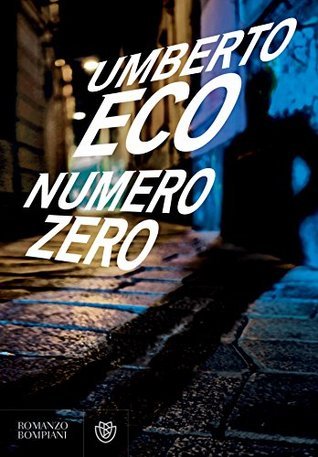
Key Insights & Memorable Quotes
The most popular highlights from Numero zero, saved by readers on Screvi.
Losers, like autodidacts, always know much more than winners. If you want to win, you need to know just one thing and not to waste your time on anything else: the pleasures of erudition are reserved for losers. The more a person knows, the more things have gone wrong.
Los perdedores, como los autodidactas, tienen siempre conocimientos más vastos que los ganadores. Si quieres ganar tienes que saber una cosa sola y no perder tiempo en sabértelas todas; el placer de la erudición está reservado a los perdedores. Cuanto más sabe uno, es que peor le han ido las cosas.
If you want to win, you need to know just one thing and not to waste your time on anything else: the pleasures of erudition are reserved for losers. The more a person knows, the more things have gone wrong.
It's true, I'd never understood whether this vogue for apologising is a sign of humility or of impudence: you do something you shouldn't have done, then you apologise and wash your hands of it. It reminds me of the old joke about a cowboy riding across the prairie who hears a voice from heaven telling him to go to Abilene, then at Abilene the voice tells him to go into the saloon and put all his money on number five. Tempted by the voice, he obeys, number eighteen comes up, and the voice murmur, Too bad, we've lost.
I dreamed what all losers dream, about one day writing a book that would bring me fame and fortune.
I perdenti, come gli autodidatti, hanno sempre conoscenze più vaste dei vincenti, se vuoi vincere devi sapere una cosa sola e non perdere tempo a saperle tutte, il piacere dell’erudizione è riservato ai perdenti.
Humbësit ashtu si autodidaktët kanë gjithnjë njohuri më të mëdha se fitimtarët. Nëse dëshiron të jesh fitimtar, duhet të dish vetëm një gjë e të mos humbasësh kohën për të mësuar gjithçka. Kënaqësia e erudicionit është vetëm për humbësit. Sa më shumë të dish, aq më keq mund të të shkojnë gjërat.
...most of them won't have a book in the house, though, when they have to, they'll talk about the latest book that's selling millions of copies around the world. Our readers may not read books, but they are fascinated by great eccentric painters who sell for billions.
The point is that newspapers are not there for spreading news but for covering it up. X happens, you have to report it, but it causes embarrassment for too many people, so in the same edition you add some shock headlines - mother kills four children, savings at risk of going up in smoke, letter from Garibaldi insulting his lieutenant Nino Bixio discovered, etc. - so news drowns in a great sea of information.
A daily newspaper is destined to become like a weekly magazine. We'll be talking about what might happen tomorrow, with feature articles, investigative supplements, unexpected predictions...
But it was the newspapers that called John XXIII the Good Pope, and the people followed suit.” “That’s right. Newspapers teach people how to think,” Simei said. “But do newspapers follow trends or create trends?” “They do both, Signorina Fresia. People don’t know what the trends are, so we tell them, then they know. But let’s not get too involved in philosophy—we’re professionals. Carry on, Colonna.
The book has to give the idea of another kind of newspaper, has to show how I labored away for a year to create a model of journalism independent of all pressure, implying that the venture failed because it was impossible to have a free voice
Deception is a state of mind and the mind of the state (attributed to James Jesus Angleton)
todo ideales y nada de ideas.
Y cuando vives cultivando esperanzas imposibles, ya eres un perdedor. Y cuando te das cuenta, te hundes.
—Pero los periódicos ¿siguen las tendencias de la gente o las crean? —Ambas cosas, señorita Fresia. La gente al principio no sabe qué tendencia tiene, luego nosotros se lo decimos y entonces la gente se da cuenta de que la tiene.
It's not the news that makes the newspaper, but the newspaper that makes the news.
I'd lost all faith in everything, except for the certainty that there's always someone behind our backs waiting to deceive us.
Do we really have to talk about professionalism? Everyone here is a professional. A master builder who puts up a wall that hasn't collapsed is certainly acting professionally, but professionalism ought to be the norm, and we should only be talking about the dodgy builder who puts up a wall that doesn't collapse....This insistence on professionalism, that it is something special, makes it sound as if people are generally lousy workers.
So, Colonna, please demonstrate to our friends how it's possible to respect, or appear to respect, one fundamental principle of democratic journalism, which is separating fact from opinion. ...''Simple,' I said. 'Take the major British or American newspapers. If they report, say, a fire or a car accident, then obviously they can't indulge in saying what they think. And so they introduce into the piece, in quotation marks, the statements of a witness, a man in the street, someone who represents public opinion. Those statements, once put in quotes, become facts - in other words, it's a fact that that person expressed that opinion. But it might be assumed that the journalist has only quoted someone who thinks like him. So there will be two conflicting statements to show, as a fact, that there are varying opinions on a particular issue, and the newspaper is taking account of this irrefutable fact. The trick lies in quoting first a trivial opinion and then another opinion that is more respectable, and more closely reflects the journalist's view. In this way, readers are under the impression that they are being informed about two facts, but they're persuaded to accept just one view as being more convincing.
Por que Deus é o ser perfeitíssimo? Porque, se fosse imperfeitíssimo, seria meu primo Gustavo.
La vida es llevadera, basta conformarse.
Los perdedores y los autodidactas siempre saben mucho más que los ganadores. Si quieres ganar, tienes que concentrarte en un solo objetivo, y más te vale no perder el tiempo en saber más: el placer de la erudición está reservado a los perdedores
—Cariño, buscaremos un país donde no haya secretos y todo se desarrolle a la luz del sol. Entre Centroamérica y Sudamérica hay un montón. Nada está oculto: se sabe quién pertenece al cártel de la droga, quién dirige las bandas revolucionarias; te sientas en un restaurante, pasa un grupo de amigos y te presentan a uno como el jefe del contrabando de armas, bien puesto, afeitado y perfumado, con esa camisa blanca almidonada que se lleva por fuera de los pantalones, con los camareros que le hacen reverencias, señor por aquí, señor por allá, y el comandante de la Guardia Civil que va a rendirle pleitesía.
Yo sospecho, sospecho siempre.
si sabes que te mienten
İnsan olanaksız ümitler besleyerek yaşadığı sürece zaten bir kaybedendir. Sonra bunun farkına vardığında her şeyi kaybedersin.
[B]ut newspapers nowadays had too many pages, no one could proof everything before it went to press, and even the major newspapers were now writing “Simone de Beauvoire,” or “Beaudelaire,” or “Roosvelt,” and the proofreader was becoming as outmoded as the Gutenberg press.
A questão é que os jornais não são feitos para divulgar, mas para encobrir as notícias. Ocorre o fato X, você não pode deixar de falar dele, mas cria problemas para gente demais, então no mesmo número você põe umas manchetes de arrepiar o cabelo, mãe degola os quatro filhos, a nossa poupança talvez vire pó, descoberta uma carta de insultos de Garibaldi a Nino Bixio e assim por diante, a sua notícia se afoga no grande mar da informação.
And anyone who nurtures impossible hopes is already a loser. Once you come to realize it, you just give up.
Find Another Book
Search by title or author to explore highlights from other books.
More Books You Might Like
Explore highlights from similar books.